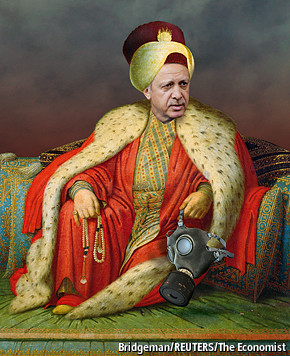
Δευτέρα 17 Νοεμβρίου 2014

Ο Στ.Λυγερός αναλύει τη γεωπολιτική κατάσταση στην Ανατολική Μεσόγειο

Στην κατάσταση που έχει δημιουργηθεί στην ανατολική Μεσόγειο αυτή την εποχή με τις προκλητικές κινήσεις της Τουρκίας αφενός και τη δημιουργία συμμαχικών τριγώνων, στα οποία μετέχουν Ελλάδα και Κύπρος αφετέρου, αναφέρεται το άρθρο του κ.Σταύρου Λυγερού που αναδημοσιεύω στη συνέχεια από το Πρώτο Θέμα της Κυριακής που μας πέρασε.
Επίσης περιγράφονται και οι πολιτικοδιπλωματικές κινήσεις των μεγάλων δυνάμεων σε σχέση με τα τεκταινόμενα στην περιοχή.
Ένα πραγματικά εξαιρετικά διαφωτιστικό άρθρο! 

Τα πηγαινέλα του τουρκικού ερευνητικού σκάφους «Μπαρμπαρός» εντός της κυπριακής ΑΟΖ, ως επίδειξη στρατιωτικο-πολιτικού τσαμπουκά, μπορεί να συνιστούν έμπρακτη αμφισβήτηση του δικαιώματος της Κυπριακής Δημοκρατίας να εκμεταλλευτεί τον ενεργειακό πλούτο της, ωστόσο δεν είναι χωρίς πολιτικό κόστος για την Άγκυρα. Η Σύνοδος Κορυφής Ελλάδας - Κύπρου - Αιγύπτου στο Κάιρο εδραιώνει τη στρατηγική σχέση των τριών χωρών και έρχεται να συμπληρώσει την τριγωνική στρατηγική σχέση Ελλάδας - Κύπρου - Ισραήλ. 

Τα δύο αυτά τρίγωνα μπορεί να μην το προβάλλουν, αλλά εμμέσως πλην σαφώς έχουν αντιτουρκικό χαρακτήρα. Η νεο-οθωμανική στρατηγική δεν τίναξε στον αέρα μόνο την άλλοτε στρατηγική σχέση Τουρκίας - Ισραήλ αλλά και τις -άλλοτε από πολύ καλές έως στενές- σχέσεις της Τουρκίας με την Αίγυπτο. 

Το Ισραήλ μπορεί να κατέβαλε προσπάθειες να γεφυρώσει το χάσμα με την Άγκυρα, αλλά οι κύριοι Ρετζέπ Ταγίπ Ερντογάν και Αχμέτ Νταβούτογλου δεν του άφησαν περιθώρια. Η αυτοκρατορική στάση και οι ηγεμονικές βλέψεις τους υποχρέωσαν το Τελ Αβίβ να ενσωματώσει στη στρατηγική του τη ρήξη με την Τουρκία και να εδραιώσει την προνομιακή σχέση του με τη Λευκωσία και την Αθήνα. Η επίσκεψη και οι δηλώσεις του Ισραηλινού υπουργού Εξωτερικών Αβιγκντορ Λίμπερμαν τις προηγούμενες ημέρες στην Κύπρο, σε συνδυασμό με την επικείμενη επίσκεψη του προέδρου Νίκου Αναστασιάδη στο Ισραήλ, σηματοδοτούν τις νέες ισορροπίες στην Ανατολική Μεσόγειο. Και η τριμερής Σύνοδος Κορυφής στο Κάιρο εντάσσεται και εδραιώνει αυτές τις ισορροπίες. 

Η καχυποψία της Δύσης 

Η περίπτωση της Αιγύπτου είναι διαφορετική από αυτή του Ισραήλ, αλλά έχει κοινό παρονομαστή. Η Άγκυρα είχε επενδύσει πολλά στους «Αδελφούς Μουσουλμάνους», θεωρούσε δικαιολογημένο ότι ο ισλαμιστής πρόεδρος Μοχάμεντ Μόρσι θα έπεφτε στην αγκαλιά της. Έτσι και έγινε. Δεν ήταν μόνο η κοινή σουνιτική ταυτότητα που τον ώθησε προς τα εκεί. Ήταν και η ανάγκη του να εξισορροπήσει την έκδηλη καχυποψία της Δύσης και να βρει εξωτερικά στηρίγματα για να εδραιώσει την ασταθή εξουσία του. Μεταξύ των άλλων, η κυβέρνηση των «Αδελφών Μουσουλμάνων» υπέγραψε το 2012 συμφωνία η οποία επέτρεπε στην Τουρκία να χρησιμοποιεί το αιγυπτιακό έδαφος ως βάση για την προώθηση των εξαγωγών της στην Αφρική. Το νέο καθεστώς στην Αίγυπτο όχι μόνο δεν ανανέωσε την εν λόγω συμφωνία αλλά και σχεδόν έκλεισε την αιγυπτιακή αγορά για τα τουρκικά προϊόντα. 

Ο Αμπντούλ Φατάχ Σαΐντ Χουσεΐν Χαλίλ αλ Σίσι, ευρύτερα γνωστός ως στρατηγός Σίσι, δεν αντιμετωπίζει τις σχέσεις με την Αγκυρα μόνο ως ζήτημα εξωτερικής πολιτικής. Οι νεο-οθωμανοί αντιπροσωπεύουν μια απειλή για το καθεστώς του, επειδή είναι το εξωτερικό στήριγμα των εσωτερικών αντιπάλων του, των «Αδελφών Μουσουλμάνων». Ο Ερντογάν αντέδρασε με οργή στην ανατροπή του προέδρου Μόρσι, όχι βεβαίως λόγω δημοκρατικής ευαισθησίας, αλλά επειδή έχασε το πιo κρίσιμο γεωπολιτικό έρεισμα. Η Αίγυπτος κατέχει δεσπόζουσα θέση στον αραβικό κόσμο. Εάν παρέμενε στην τουρκική σφαίρα επιρροής, το νεο- οθωμανικό όραμα θα αποκτούσε υπόσταση. Πολύ περισσότερο εάν το καθεστώς Ασαντ ανατρεπόταν και τη θέση του έπαιρνε ένα σουνιτικό καθεστώς ελεγχόμενο από την Άγκυρα. Όλα αυτά θα συνδυάζονταν με τον απόλυτο έλεγχο της Βόρειας Κύπρου και με την προσδοκία του Ερντογάν να θέσει την ελεύθερη Κύπρο σε γεωπολιτική ομηρία μέσω της επιβολής ενός σχεδίου τύπου Ανάν. 

Aς σημειωθεί ότι στο περιθώριο της γενικής συνέλευσης του ΟΗΕ τον περασμένο Σεπτέμβριο, ο Τούρκος υπουργός Εξωτερικών Μεβλούτ Τσαβούσογλου ζήτησε συνάντηση με τον Αιγύπτιο ομόλογό του Σαμέχ Χασάν Σελίμ για να γεφυρώσει κάπως το χάσμα. Η απάντηση, όμως, ήταν αρνητική λόγω των προσβλητικών δηλώσεων Ερντογάν για τον πρόεδρο Σίσι. 

Αντιμετωπίζοντας την Τουρκία ως απειλή, το καθεστώς Σίσι δεν είχε άλλη επιλογή από το να στραφεί προς τη Λευκωσία και την Αθήνα. Τον προσανατολισμό του αυτόν ενισχύουν και δύο πρόσθετοι παράγοντες: ο πρώτος είναι ότι έχει ήδη διαμορφωθεί και λειτουργεί παραλλήλως το τρίγωνο Ελλάδα - Κύπρος - Ισραήλ. Ο δεύτερος είναι η διογκούμενη δυσφορία της Δύσης προς το δίδυμο Ερντογάν - Νταβούτογλου. 

Ο δρόμος, άλλωστε, είχε ανοίξει πριν από μια δεκαετία, όταν η Αίγυπτος και η Κυπριακή Δημοκρατία συμφώνησαν στην οριοθέτηση της μεταξύ τους ΑΟΖ με βάση την αρχή της μέσης γραμμής. Το Κάιρο αποδέχτηκε αυτή την αρχή επειδή εκείνη την εποχή την επικαλείτο στις διαπραγματεύσεις για την οροθέτηση της ΑΟΖ με τη Σαουδική Αραβία. Δεν μπορούσε, λοιπόν, να εμφανιστεί με δύο γραμμές. Όπως και στην περίπτωση των κυπροϊσραηλινών σχέσεων, η ανακάλυψη των ενεργειακών κοιτασμάτων πρόσθεσε στο γεωπολιτικό και το γεωοικονομικό κίνητρο. Τα δύο τρίγωνα (Ελλάδα - Κύπρος - Ισραήλ και Ελλάδα · Κύπρος - Αίγυπτος) προκαλούν έντονη ανησυχία στην Άγκυρα επειδή διαμορφώνουν συνθήκες που την απομονώνουν πολιτικά στην Ανατολική Μεσόγειο. 

Προειδοποίηση από τη Μόσχα 

Δεν είναι άλλωστε, μόνο οι τοπικές δυνάμεις που παίζουν εναντίον της. Είναι και η Ρωσία, η οποία αντιμετωπίζει πλέον την Τουρκία ως αντίπαλο. Η έμμεση πλην σαφής σύγκρουσή τους στο μέτωπο της Συρίας και η έμμεση πλην σαφής υποστήριξη της Άγκυρας προς τους τζιχαντιστές έχουν επηρεάσει τη στάση της Μόσχας έναντι του Ερντογάν. Σύμφωνα με πληροφορίες του ρωσικού πρακτορείου Ιτάρ Tας, ο πρόεδρος Πούτιν χαρακτήρισε (στο πλαίσιο των πρόσφατων συζητήσεων της Λέσχης Βαλντάι στο Σότσι) το νεο-οθωμανικό καθεστώς σοβαρή απειλή για τη διεθνή ασφάλεια και κίνδυνο για την περιφερειακή σταθερότητα. Πρόσθεσε, μάλιστα, ότι η Ρωσία θα λάβει τα κατάλληλα μέτρα για να εμποδίσει τον Ερντογάν να προκαλέσει τυχοδιωκτικές περιπέτειες στη Μέση Ανατολή. 

Οι πρόσφατες ασκήσεις του ρωσικού ναυτικού στην Ανατολική Μεσόγειο ήταν ένα μήνυμα ότι η Μόσχα όχι μόνο θα συνεχίσει να στηρίζει το καθεστώς Ασαντ, αλλά και θα είναι παρούσα στην περιοχή ως παράγοντας αποτροπής της τουρκικής επιθετικότητας. Είναι ενδεικτικό ότι ενώ ο πρόεδρος Πούτιν απεχθάνεται πολιτικά τον πρόεδρο Αναστασιάδη, τον προσκάλεσε να επισκεφτεί τον Ιανουάριο τη Μόσχα, ακριβώς για να στείλει το μήνυμα ότι στηρίζει την Κυπριακή Δημοκρατία. 

Το πρόβλημα για τον Ερντογάν δεν είναι μόνο η αντιπαλότητα της Ρωσίας και τα δύο τρίγωνα. Στην πραγματικότητα, τίποτα δεν του βγαίνει. Η Λιβύη έχει μετατραπεί σε "μαύρη τρύπα", αλλά και εκεί οι περισσότερες φατρίες αρνούνται την τουρκική κηδεμονία. Η Αλγερία και το Μαρόκο, δε, τηρούν επιφυλακτική στάση έναντι της νεο-οθωμανικής Τουρκίας. 

Το μόνο έρεισμά της στο Μαγκρέμπ ήταν η Τυνησία, αλλά κι αυτό χάθηκε μετά την εκλογική ήττα των ισλαμιστών. Της έχουν απομείνει η Χαμάς στη Γάζα και το Κατάρ. Η Σαουδική Αραβία δεν καλοβλέπει τον Ερντογάν, επειδή τον θεωρεί ανταγωνιστή στην κούρσα για το ποιος θα ασκεί επιρροή στο σουνιτικό τόξο. Δεν είναι τυχαία βέβαια η πρόσφατη παταγώδης αποτυχία της Τουρκίας να εκλεγεί μη μόνιμο μέλος του Συμβουλίου Ασφαλείας. 

Οι Άραβες ακούνε με μεγάλη επιφύλαξη δηλώσεις όπως αυτή του Νταβούτογλου: «Στην ιστορική πορεία του αγίου έθνους μας, το Κόμμα Δικαιοσύνης και Ανάπτυξης σηματοδοτεί τη γέννηση μιας παγκόσμιας δύναμης και την αποστολή της για τη δημιουργία μιας νέας παγκόσμιας τάξης... Ό,τι χάσαμε στην περίοδο 1911 -23 (περίοδος διάλυσης της οθωμανικής αυτοκρατορίας), από όποιες χώρες αποσυρθήκαμε, θα συναντηθούμε πάλι με τους αδελφούς μας σ' αυτές τις χώρες» (Απρίλιος 2012). 

Το μεγαλύτερο πρόβλημα για τους νεο-οθωμανούς, όμως, είναι η επιδείνωση των σχέσεων τους με τη Δύση. Οι Αμερικανοί και οι Ευρωπαίοι έχουν ανάγκη την Τουρκία στη Μέση Ανατολή και ως εκ τούτου δεν στρέφονται εναντίον της. Το γυαλί, όμως, έχει ραγίσει. Δεν εμπιστεύονται πλέον τον Ερντογάν. Τον θεωρούν περισσότερο μέρος του προβλήματος παρά της λύσης κι αυτό κάποια στιγμή θα αποτυπωθεί και πρακτικά στην πολιτική τους. Προς το παρόν, όμως, όπως θα δούμε στη συνέχεια, τηρούν ποντιοπιλατική στάση στο ζήτημα της τουρκικής πρόκλησης. 

Αυτό είναι το γεωπολιτικό περιβάλλον, εντός του οποίου το «Μπαρμπαρός» παραβιάζει την κυπριακή ΑΟΖ. Ο Κύπριος υπουργός Εξωτερικών εκμεταλλεύτηκε το κλίμα σχετικής απομόνωσης της Άγκυρας για να υφάνει ένα διπλωματικό δίχτυ με σκοπό να ακυρώσει ολοσχερώς τον τουρκικό ισχυρισμό ότι η Κυπριακή Δημοκρατία είναι «εκλιπούσα». Αντιθέτως, με το δίχτυ που υφαίνεται όχι μόνο υποστηρίζει τα κυριαρχικά δικαιώματά της, αλλά και προσπαθεί να πουλήσει στη Δύση μια νέα αντίληψη για τη σταθερότητα στην Ανατολική Μεσόγειο, στο κέντρο της οποίας είναι η Κυπριακή Δημοκρατία. 

Η οροθέτηση των θαλάσσιων ζωνών 

Η διπλωματική δυναμική που έχει αναπτυχθεί με τα δύο τρίγωνα (προσεχώς ενδέχεται να συμπεριλάβει και την Ιορδανία) έχει φέρει στο τραπέζι και το ακανθώδες ζήτημα της οριοθέτησης των θαλάσσιων ζωνών μεταξύ Ελλάδας και Αιγύπτου. Η ελληνική θέση είναι ότι το σύμπλεγμα του Καστελόριζου όχι μόνο διαθέτει δικαίωμα σε θαλάσσιες ζώνες, όπως προβλέπει το Δίκαιο της θάλασσας, αλλά έχει και πλήρη επήρεια, δηλαδή η οριοθέτηση πρέπει να γίνει με βάση την αρχή της μέσης γραμμής. Μέχρι πρότινος το Κάιρο ήταν πολύ επιφυλακτικό στο να συνάψει τέτοια συμφωνία λόγω των αντίθετων θέσεων της Τουρκίας. Η αιγυπτιακή διπλωματική γραφειοκρατία διατηρεί την επιφυλακτικότητά της, αλλά το καθεστώς Σίσι φαίνεται ότι ξεπερνάει αυτούς τους ενδοιασμούς. Η Σύνοδος Κορυφής δεν πρόκειται, βεβαίως, να παραγάγει συμφωνία οριοθέτησης, αλλά θα φανεί εάν θα ανάψει ή όχι το πράσινο φως. 

Εάν υπογραφεί συμφωνία οριοθέτησης των θαλάσσιων ζωνών Ελλάδας - Αίγυπτου, θα πρέπει να θεωρείται δεδομένο ότι το «Μπαρμπαρός» θα μετακομίσει σύντομα νοτίως του Καστελόριζου για να αμφισβητήσει εμπράκτως την ελληνική υφαλοκρηπίδα/ΑΟΖ. Πώς θα αντιδράσει τότε η Αθήνα; Η Ελλάδα δεν είναι η μικρή και με αμελητέες στρατιωτικές δυνατότητες Κυπριακή Δημοκρατία για να αντιδράσει μόνο με διπλωματικά μέσα. Εάν δεν εμποδίσει τις έρευνες του «Μπαρμπαρός», θα υποστεί πολιτική ήττα. Από την άλλη πλευρά, το ισοζύγιο ισχύος με την Τουρκία δεν ήταν ποτέ τις τελευταίες δεκαετίες τόσο δυσμενές για την Ελλάδα. Με άλλα λόγια, η οριοθέτηση των θαλάσσιων ζωνών με την Αίγυπτο θα προκαλέσει ως απάντηση έμπρακτες τουρκικές προκλήσεις. Η Αθήνα οφείλει να μετρήσει προσεκτικά τα ρίσκα. Είναι σκόπιμο να εκμεταλλευτεί την ευκαιρία, αλλά κατά τρόπο που δεν θα μετατραπεί σε πολιτικό μπούμερανγκ. Θα πρέπει η οριοθέτηση να γίνει έτσι ώστε να διοχετεύσει τις αντιρρήσεις της Άγκυρας στην κοίτη του Διεθνούς Δικαστηρίου της Χάγης και όχι σε στρατιωτικού τύπου προκλήσεις και τετελεσμένα. 

Βόλτες έως τον Δεκέμβριο 

Τα πηγαινέλα του «Μπαρμπαρός» μπορεί να αμφισβητούν το δικαίωμα της Κυπριακής Δημοκρατίας να εκμεταλλευτεί τον ενεργειακό πλούτο της, αλλά δεν προκαλούν τετελεσμένο. Θα προέκυπτε τετελεσμένο εάν το τουρκικό Πολεμικό Ναυτικό εμπόδιζε τη διεξαγόμενη γεώτρηση από την κοινοπραξία της ιταλικής ΕΝΙ και της κορεατικής KOGAS στο θαλάσσιο οικόπεδο 9. 

Μία τέτοια εξέλιξη, ωστόσο, θεωρείται απίθανη, επειδή θα έστρεφε όλες τις μεγάλες πετρελαϊκές εταιρείες εναντίον της Τουρκίας. Οι κολοσσοί της ενέργειας έχουν συμφέρον να μη δημιουργηθεί τέτοιο προηγούμενο και έχουν τη δυνατότητα να ασκούν αποφασιστική επιρροή στις δυτικές κυβερνήσεις. Σύμφωνα με αξιόπιστες πληροφορίες, η Άγκυρα έχει λάβει τα μηνύματα. Ο δεύτερος τρόπος για να δημιουργήσει η Άγκυρα τετελεσμένο είναι να εγκαταστήσει πλατφόρμα γεώτρησης και άντλησης εντός της κυπριακής ΑΟΖ. Αν και υπάρχουν τέτοιες δηλώσεις, το εγχείρημα δεν είναι εύκολο. Καμία πετρελαϊκή εταιρεία δεν πρόκειται να συμπράξει σε μια τόσο κραυγαλέα παρανομία. Κατά συνέπεια, ο μόνος δρόμος είναι οι Τούρκοι να αγοράσουν πλατφόρμα. Κι αυτό, όμως, είναι δύσκολο. Ακόμα κι αν βρουν πλατφόρμα να αγοράσουν, θα χρειαστούν πολύ χρόνο. 

Κατά πάσα πιθανότητα, λοιπόν, η τρέχουσα τουρκική πρόκληση θα παραμείνει στο ίδιο επίπεδο, χωρίς κλιμάκωση. Με άλλα λόγια, το «Μπαρμπαρός» θα κάνει τις βόλτες του για το διάστημα που έχουν προγραμματιστεί οι έρευνες και τον Δεκέμβριο θα αποχωρήσει. 

Πόντιος Πιλάτος οι ΗΠΑ 

Η Λευκωσία δεν έχει λόγο, λοιπόν, να υποκύψει στις πιέσεις και να δώσει αντάλλαγμα για την αποχώρησή του από την κυπριακή ΑΟΖ. Το αντάλλαγμα που της ζητάνε είναι να σταματήσουν οι γεωτρήσεις και να μετατραπεί σε αντικείμενο διαπραγμάτευσης το μοίρασμα του ενεργειακού πλούτου. Την απαίτηση αυτή δεν την προβάλλει μόνο η Άγκυρα. Την προβάλλουν και η Ουάσινγκτον και πολλοί Ευρωπαίοι. Ο ειδικός σύμβουλος για το Κυπριακό του γενικού γραμματέα των Ηνωμένων Εθνών, μάλιστα έφτασε στο σημείο να πει ότι και οι δύο πλευρές πρέπει να δώσουν κάτι για να εκτονωθεί η ένταση. Αποσιώπησε, βεβαίως, το γεγονός ότι η ένταση προκλήθηκε λόγω της τουρκικής επιθετικότητας. Λόγω της στενής σχέσης του με την Ουάσινγκτον, ο πρόεδρος Αναστασιάδης πίστευε ότι οι Αμερικανοί θα θωράκιζαν πολιτικά το δικαίωμα της Κυπριακής Δημοκρατίας να εκμεταλλευτεί τα ενεργειακά κοιτάσματά της και θα απέτρεπαν τουρκικές προκλήσεις. Όπως έχουμε όμως, προαναφέρει, αυτοί τηρούν ποντιοπιλατική στάση. Όχι μόνη δεν καταδικάζουν ευθέως την ωμή παραβίαση της κυπριακής ΑΟΖ, αλλά και εμμέσως πλην σαφώς τη χρησιμοποιούν για να προωθήσουν το μοίρασμα του ενεργειακού πλούτου. 

Ακόμα χειρότερη είναι η στάση του Λονδίνου. Στην πρόσφατη Σύνοδο Κορυφής, ο Ντέιβιντ Κάμερον έφτασε στο σημείο να αναρωτηθεί εάν η Κυπριακή Δημοκρατία έχει ΑΟΖ πριν λυθεί το Κυπριακό! Στο πλαίσιο της E.E. οι Βρετανοί κάνουν ό,τι μπορούν για να ανατρέψουν κινήσεις καταγγελίας της Τουρκίας. Παραλλήλως, προσπαθούν να εμποδίσουν την επιχειρούμενη από τη Λευκωσία διασύνδεση των ενταξιακών διαπραγματεύσεων της Τουρκίας με τη συμπεριφορά της έναντι της Κυπριακής Δημοκρατίας. Η στάση του αμερικανοβρετανικού παράγοντα και ορισμένων' Ευρωπαίων διευκολύνει τον Ερντογάν vα χειριστεί την κρίση που ο ίδιος προκάλεσε στην Κύπρο από σχετικά πλεονεκτική θέση. Από την άλλη πλευρά, όμως, η πολιτική του έχει σε μεγάλο βαθμό βλάψει τη δημόσια εικόνα της Τουρκίας και την έχει απομονώσει πολιτικά στον περίγυρό της. Αυτό, ωστόσο, δεν σημαίνει ότι αποκλείεται κλιμάκωση των προκλήσεων. Ο τυχοδιωκτισμός, άλλωστε, εμφιλοχωρεί στη νεο-οθωμανική φαντασίωση.

Το κόστος της στρατηγικής υπερεξάπλωσης της Τουρκίας

Του Χρήστου Ιακώβου

Εδώ και τρία χρόνια επεκτείνονται οι έρευνες στον υποθαλάσσιο χώρο της Αποκλειστικής Οικονομικής Ζώνης της Κυπριακής Δημοκρατίας, παρά τις απειλές της Τουρκίας, η οποία από την αρχή αντετάχθη στην εξέλιξη αυτή. Οι λόγοι για τους οποίους η Τουρκία εξέφρασε αυτή την αντίθεσή είναι στρατηγικοί και έχουν να κάνουν με τις ηγεμονικές της αξιώσεις στο θαλάσσιο χώρο της Ανατολικής Μεσογείου, ο οποίες εντάσσονται στην υψηλή στρατηγική της χώρας προκειμένου να καταστεί μέχρι τα μέσα του τρέχοντος αιώνα σε δύναμη μεσαίας εμβέλειας στο διεθνές σύστημα.
Μέχρι στιγμής, η Τουρκία δείχνει ότι ευρίσκεται σε γεωστρατηγικό αδιέξοδο αφού δεν κατάφερε να αποτρέψει τις έρευνες και ταυτόχρονα έθεσε την τακτική αμφισβήτησης που επέλεξε σε μεγάλο ρίσκο. Το ερώτημα που τίθεται, μετά από αυτές τις εξελίξεις των τελευταίων εβδομάδων, είναι πως η Τουρκία βρέθηκε σε αυτό το γεωστρατηγικό αδιέξοδο.
Κατ’ αρχάς, θα πρέπει να επισημανθεί για λόγους αναλυτικής προσπέλασης ότι η Τουρκία ευρίσκεται σε μία περίοδο γενικότερης γεωστρατηγικής αβεβαιότητας και ανησυχίας. Σε ό,τι αφορά τις περιφερειακές εξελίξεις – υπάρχει παρατεταμένη αστάθεια στη Συρία με πιο πιθανό σενάριο την επιβίωση του καθεστώτος Άσαντ, το Ιράν σπεύδει να καλύψει το κενό ισχύος που δημιουργείται με την αποχώρηση των Αμερικανών από το Ιράκ και δημιουργεί πλαίσιο σύγκλισης με τις ΗΠΑ στην αντιμετώπιση των σουννιτών τζιχαντιστών, δημιουργείται νέο πλαίσιο στις σχέσεις Αιγύπτου και Ισραήλ μετά την ανατροπή των ισλαμιστών στην Αίγυπτο, το Παλαιστινιακό παραμένει μετέωρο, η πορεία των αραβικών εξεγέρσεων δεν έχει ξεκαθαρίσει ακόμη και το κουρδικό εθνικό κίνημα στην Τουρκία, τη Συρία και το Ιράκ, αναδιπλώνεται με πιο κατηγορηματικές αξιώσεις λαμβάνοντας πλέον περιφερειακό χαρακτήρα και προοπτικές διεθνούς υποστήριξης. Όλα αυτά δημιουργούν στρατηγικά διλήμματα στην Άγκυρα τα οποία τη σπρώχνουν να αναλάβει δράση.
Κατά το παρελθόν, και ενόσω οι Κεμαλικοί καθόριζαν τις επιλογές της τουρκικής εξωτερικής πολιτικής, η Τουρκία αποτελούσε σημαντικό παράγοντα διευκόλυνσης της αμερικανικής εξωτερικής πολιτικής στην Μ. Ανατολή, στη βάση προώθησης κοινών συμφερόντων και συνεπώς η αντίδρασή της ήταν πιο προβλέψιμη. Σήμερα τα πράγματα αλλάζουν, λόγω της προσπάθειας της Τουρκίας να διευρύνει το πεδίο πολιτικής και διπλωματικής δράσης στην περιοχή, γεγονός που τη φέρει σε απόκλιση συμφερόντων σε σχέση με τις ΗΠΑ. Καθοριστικής σημασίας γι΄ αυτή την αλλαγή ήταν η σταδιακή ακύρωση του άξονα Τουρκίας – Ισραήλ, ως στρατηγική επιλογή της Άγκυρας, προκειμένου να ανοίξει ο δρόμος για την νέα μεσανατολική της πολιτική.
Βασικός άξονας των κινήσεων της κυβέρνησης Ερντογάν είναι να καλύψει το γεωστρατηγικό κενό ισχύος που δημιουργήθηκε στη Μέση Ανατολή μετά το τέλος του Ψυχρού Πολέμου. Με αυτό τον τρόπο προσάρμοσε στην εξωτερική πολιτική της Τουρκίας μία ρητορική που ανακαλεί τις ιδεολογικές παραστάσεις του πανισλαμισμού κατά τα τελευταία χρόνια προ της διάλυσης της Οθωμανικής Αυτοκρατορίας. Αυτό μπορεί να έχει επίκληση στις λαϊκές μάζες των μουσουλμάνων της Μέσης Ανατολής όχι όμως στις πολιτικές τους ηγεσίες που εκλαμβάνουν την Τουρκία με διαφορετικούς όρους.
Το γεωστρατηγικό αδιέξοδο στο οποίο ευρέθη επ’ εσχάτων στην Ανατολική Μεσόγειο, καταδεικνύει τη γενικότερη αδυναμία, αλλά ιδιαιτέρως την απουσία γεωστρατηγικής προοπτικής της Τουρκίας να εκπληρώσει το ρόλο που επιδιώκει στην περιοχή. Χρειάζεται χρόνος να οικοδομήσει μία χώρα ισχυρή περιφερειακή πολιτική και είναι απαραίτητο για συνοδεύει αυτή την πολιτική, κατά καιρούς, με επίδειξη στρατιωτικής και πολιτικής ισχύος. Αυτό, για ένα κράτος με φιλοδοξίες όπως η Τουρκία, σημαίνει ότι θα μπορούσε να πληρώσει κόστος αν τα γειτονικά κράτη αρχίζουν να αντιδρούν και να εμποδίζουν την Τουρκία από το να προχωρήσει πάρα πέρα και ακόμη περισσότερο για την ίδια την Τουρκία να χάνει συμμάχους από το παρελθόν.
Είναι σαφές πλέον ότι η Τουρκία είναι ανέτοιμη να διαχειριστεί τις δύσκολες πτυχές της περιφερειακής της πολιτικής και αντ’ αυτού αναλώνεται σε, χαμηλού κόστους, πολεμική ρητορική (όπως στην περίπτωση της Συρίας, της Κύπρου και της Ελλάδος) διατηρώντας ένα πλαίσιο μέσα στο οποίο μπορεί μόνο πολιτικοδιπλωματικώς να δικαιολογεί το ρόλο της.
*Ο Χρήστος Ιακώβου είναι Διευθυντής του Κυπριακού Κέντρου Μελετών

Πέμπτη 30 Οκτωβρίου 2014

How Turkey Went Bad

by Daniel Pipes
The Weekly Standard
October 13, 2014

N.B. From title ("Who Lost Turkey? An Ally Goes Rogue")* to text, this version differs substantially from the Weekly Standard's.

Only twelve years ago, the Republic of Turkey was correctly seen as a stalwart NATO ally, the model of a pro-Western Muslim state, and a bridge between Europe and the Middle East. A strong military bond with the Pentagon undergirded broader economic and cultural ties with Americans. For those of us who work on the Middle East, time in Istanbul, Ankara, and other Turkish cities was a refreshing oasis from the turmoil of the region.
And then, starting with the still-astonishing election of 2002, the country dramatically changed course. Slowly at first and then with increasing velocity since mid-2011, the government began breaking its own laws, turned autocratic, and allied with the enemies of the United States. Even those most reluctant to recognize this shift have been forced to do so. If Barack Obama listed Turkey's dominant political leader, Recep Tayyip Erdoğan, as one of his five best foreign friends in 2012, he showed a quite different attitude by having a mere chargé d'affaires represent him at Erdoğan's presidential inauguration a few weeks ago – a public slap in the face.


Obama and Erdoğan, not quite best buddies anymore.

What caused this shift? Why did Turkey go rotten?

Background

To understand today's unexpected circumstances requires a quick glance back to the Ottoman Empire. Founded in 1299, its control over substantial part of the European continent (mainly the Balkan area, named after the Turkish word for mountain) made it the only Muslim polity to engage intensely with Europe as Western Christians rose to become the wealthiest and most powerful people on the planet. As the Ottoman Empire weakened relative to other European powers over the centuries, how to dispose of it became a major concern of European diplomacy (the "Eastern Question") and the empire came to be seen as potential prey (the "sick man of Europe.")
From the Ottoman perspective, the endlessly unresolved question was what to adopt from Europe and what to reject. In general, the Ottomans found military and medical innovations to be the most palatable. In other areas, they dithered; for example, while the Jews published the empire's first movable-type book in 1493, Muslims waited centuries until 1729 - to follow suit. In other words, accepting European ways was a slow, difficult, and sporadic process.


Among other attributes, Atatürk was a Western-style dandy.
The Turkish defeat in World War I occurred against this backdrop, prompting the army's outstandingly victorious general, Mustafa Kemal, to seize power and close down the empire in favor of the Republic of Turkey, far smaller and limited mainly to Turkish language-speakers. For the new country's first 15 years, 1923-38, Mustafa Kemal (who renamed himself Atatürk) dominated the country. A strong willed Westernizer who despised Islam, he imposed a sequence of radical changes that characterize the country to this day, and make it conspicuously different from the rest of the Middle East, including laicism (i.e., secularism on steroids), codes of law based on European prototypes, the Latin alphabet, and family surnames.
In some cases, Atatürk advanced well ahead of his countrymen, such as when he proposed placing pews in mosques or changing the call to prayer from Arabic to Turkish. Starting almost immediately after his death in 1938, a reversal from his secularism began. But the Turkish military, in its dual role as the country's ultimate political power and the self-conscious heir of Atatürk's legacy, placed limits on these changes. The first serious efforts began with the advent of democracy in the 1950s, with many subsequent efforts, none successful.
The military, however, is a force neither for creativity nor intellectual growth, so the adages of Atatürk, unceasingly repeated over the decades, became stale and restricting. As dissent increased, the parties holding to his 1920s vision stagnated, degenerating into corrupt, power-seeking organizations. By the 1990s, their revolving-door governments had alienated a sizeable portion of the electorate.

The AKP's Rise

Seizing the moment, Erdoğan and another Islamist politician, Abdullah Gül, founded the Justice and Development Party (AKP) in 2001. Promising good government and economic growth based on conservative values, it performed impressively in its inaugural election of November 2002, winning just over one-third of the vote. But because the pashas of the old-line parties refused to cooperate among themselves, only one, the Republican People's Party (CHP), won more than the minimum 10 percent of the vote the constitution requires to gain representation in parliament.
With nearly half the votes thus wasted, the AKP's 34 percent of the vote translated into 66 percent of the seats in parliament, turning a handsome plurality into a resounding victory. In the subsequent elections of 2007 and 2011, its opponents learned not to squander their votes, so the AKP had the ironic fate of increasing its percentage of the vote (to 46 and 50 percent) while losing seats in parliament (to 62 and 59 percent).
Erdoğan vigorously controlled himself at first, focusing on economic growth and removing the detritus of Turkish public life, such as the long-standing refusal to acknowledge that Kurds are not Turks, settling the Cyprus problem, and joining the European Union. He went from strength to strength, wracking up Chinese-like rates of economic growth, emerging as a power broker in the Middle East (for example, between Jerusalem and Damascus), and emerging as the West's favorite Islamist. In the process, he seemed to solve the centuries' old conundrum of Islam vs. the West, finding a successful blend of the two.
Bringing the military to heel, however, remained the long-term AKP goal: it was the necessary condition to achieving its ultimate goal of reversing the Atatürk revolution and returning Turkey to an Ottoman-like domestic order and international standing. This it achieved with surprising ease; for reasons still unclear, the leadership of the armed forces quietly endured the conspiracy theories flung at it, the arrests of top officers, and finally the firing of the general staff. The anticipated high drama resulted in hardly a whimper.
As the military surrendered, Erdoğan took aim at his domestic rivals, especially his long-time ally, the Islamist Fethullah Gülen, the leader of a massive national movement with networks placed in key government institutions. Erdoğan's populist flamboyance played very well with his constituency - Turks who felt oppressed by Atatürkism. Encouraged, he emerged as a full-blown bombaster in June 2013 with the Gezi Park demonstrations in Istanbul, lashing out against fellow citizens with demeaning insults and bringing a group of soccer fans to trial on charges of attempting to overthrow his government.
Dramatic evidence of AKP corruption that came to light in December 2013 prompted not a retreat but the arrest of the police who uncovered the problem. This aggression extended to opponents in the media, parliament, and even the justice system. As Erdoğan demonized his critics, he delighted his base, winning each election and accruing more personal power, reminding some of Venezuela's Hugo Chávez.

Foreign Policy


International relations followed the same outlines, with an initial set of modest foreign goals becoming, over time, ever grander and more hostile. A "zero problems with neighbors" policy enunciated by his chief foreign policy advisor, Ahmet Davutoğlu, began successfully: a joint vacation with the tyrant of Damascus, helping the mullahs in Tehran avoid sanctions, and mutually beneficial if tepid relations with the Jewish state. Even long-time foes such as Greece and Armenia benefited from his charm offensive. The great powers sought good relations. The AKP's neo-Ottoman dream of acquiring primacy among its former colonials seemed attainable.
But then Erdoğan displayed the very arrogance abroad that he had unleashed at home, and to much worse reviews; if half the Turkish electorate applauded his tongue-lashings, few foreigners did. As the Arab upheavals changed the Middle East beginning in 2011, Erdoğan and Davutoğlu found their accomplishments slipping away, to the point that Ankara now has poor to venomous relations with many of its neighbors.
The break with Bashar al-Assad of Syria, perhaps the most dramatic of his losses, has had many negative consequences, bringing to Turkey millions of unwelcome Arabic-speaking refugees, causing a proxy war with Iran, obstructing Turkish trade routes to much of the Middle East, and creating jihadi forces which produced the Islamic State and its self-proclaimed caliphate. Turkish support for the Sunnis of Iraq precipitated a collapse in relations with Baghdad. A Nazi-like hostility to Israel terminated Ankara's strongest regional bond. Erdoğan's ardent support for Muslim Brotherhood rule in Egypt, which lasted one year, 2012-13, transmuted later into open hostility toward its successors. Threats against the Republic of Cyprus in the aftermath of its discovery of gas, further soured an already adversarial relationship. Turkish contractors lost more than $19 billion in Libya's anarchy.
Internationally, a feint in the direction of buying a Chinese missile system brought security relations with Washington to a new low. Calls for the millions of Turks living in Germany not to assimilate into that country created tensions with Berlin, as did Ankara's possible role in the murder of three Kurds in Paris.
These outrages have left Ankara nearly friendless. It enjoys warm relations with exactly one government, Qatar (national population 225,000), along with the Kurdistan Regional Government in northern Iraq and with the Muslim Brotherhood, including that organization's Hamas and Syrian offshoots. Strangely, despite this thundering failure, Erdoğan continues to endorse the failed "zero problems" policy.

Prospects

Erdoğan's impressive record of electoral success and expanded power faces three challenges over the next year: electoral, psychological, and economic. His ascent to the presidency on August 28 requires constitutional changes for him to become the strong executive president he aspires to be. In turn, those changes require the AKP to do well in the June 2015 national elections; or, alternatively, to make substantial concessions to Turkish Kurds to win their support for his ambitions. Now that the party finds itself in the untested hands of Davutoğlu, recently promoted from foreign minister to prime minister, its ability to win the necessary seats is in doubt.
Second, Erdoğan's fate depends on Davutoğlu remaining his faithful consigliere. Should Davutoğlu develop independent ambitions, which is entirely possible, Erdoğan will find himself limited to a mostly-ceremonial post.
Lastly, the shaky Turkish economy depends on foreign hot money seeking higher rates of return, vast undocumented flows of money from the Gulf States whose provenance and continuity are both questionable, and a host of infrastructure projects to continue growing. Here, Erdoğan's highly erratic behavior (ranting against what he calls the "interest lobby" and against rating agencies such as Moody's and Fitch, and even against the New York Times) discourages further investment while a huge debt overhang threatens to leave the country bankrupt.

Hot money has paid for infrastructure in Turkey, including the third Bosporus bridge.
So, while his unbroken record of success makes one inclined to bet on Erdoğan's continuing domination of Turkish politics, major obstacles do exist that could end his winning streak. His symbiosis of learning from the West while remaining loyal to Islamic ways might yet implode.

U.S. Policy

With its youthful population of 75 million, a central location, control of a key waterway, and eight mostly problematic neighbors, Turkey is a highly desirable ally. In addition, it enjoys a position of prominence in the Middle East, among Turkic-speakers from Bosnia to Xinjiang, and among Muslims worldwide. The U.S.-Turkish alliance that began with the Korean War has been highly advantageous to Washington, which is understandably loath to lose it.
That said, one side alone cannot sustain an alliance. Ankara's record of friendly relations with Tehran, support for Hamas and the Islamic State, undermining the authority of Baghdad, virulence toward Israel, and threats against Cyprus make its membership in NATO questionable at best and duplicitous at worst.
Washington must signal that the bully tactics winning votes within Turkey fail in the rest of the world. TheWall Street Journal has helpfully proposed moving a U.S. military base in Turkey to Iraqi Kurdistan. Erdoğan's increasingly dictatorial rule must be repudiated as should Ankara's continued occupation of Cyprus, its support for terrorists, and its antisemitic effusions. Beyond these steps, the time has come for the U.S. government to make clear that unless major changes occur quickly, it will push for Turkey's suspension and eventual expulsion from NATO.
If Erdoğan insists on acting the rogue, then that's how its former ally should treat him.
Mr. Pipes (DanielPipes.org) is president of the Middle East Forum. © 2014 by Daniel Pipes. All rights reserved.

* I used the title "Who Lost Turkey" in 2010 and the title "Is Turkey Going Rogue?" in 2011.
Related Topics:  Turkey and Turksreceive the latest by email: subscribe to daniel pipes' free mailing listThis text may be reposted or forwarded so long as it is presented as an integral whole with complete and accurate information provided about its author, date, place of publication, and original URL.

It’s time to kick that “turkey” Turkey out of NATO

 
by Jim.

 photo EUandNATO_zps36ec7567.png

In the 60’s, the expression: “You’re such a turkey!” implied that the person on the receiving end of the comment was a loser, inept, a fool, or generally uncool. Turkey a member of NATO has become all of those things and much worse under the leadership of  Recep Tayyip Erdo?an. A much stronger adjective is need to describe what a non-ally Turkey has become. Under Erdogan, Turkey has gone from being a decidedly secular nation to a decidedly Islamic nation.
Daniel Pipes of the Middle East Forum has written a series of excellent articles on the evolution of Turkey from friend to foe. The first article I want to direct yo to is titled How Turkey Went Bad.  This is an excellent background article on the history of Turkey, which includes the rise of Erdogan to power and the disturbing parallels between his style and that of the late Hugo Chavez in Venezuela. The next two articles are titled Turkish Support for ISIS and More on Turkish Support for ISIS. These two articles are loaded with links and evidence that Turkey is anything but a US/NATO ally in the fight against ISIS. Turkey’s relations with its neighbors in the region have, including Israel, have gone from good and very good to very bad in the last three years. Today it only has good relations Qatar and the Kurds of Iraq.
This morning Fox News.com leading story is about the how the Kurdish city of Kobani, Syria on the border with Turkey is about to fall into the hands of the ISIS as Turkish forces amassed on the Turkish side of the border sit there and do nothing.
The White House is growing more frustrated with Turkish inaction against Islamic State fighters as Kurdish forces desperately battle to keep the Syrian border town of Kobani from falling into militants’ hands, according to a published report.
{…}
“After all the fulminating about Syria’s humanitarian catastrophe, they’re inventing reasons not to act to avoid another catastrophe,” the official continued. “This isn’t how a NATO ally acts while hell is unfolding a stone’s throw from their border.”
{…}
Turkish President Recep Tayyip Erdogan said the U.S.-led coalition’s air campaign launched last month would not be enough to halt the Islamic State group’s advance. Turkish troops have been massed near the border since the assault on Kobani began, but have so far not taken an offensive posture.
“Kobani is about to fall,” Erdogan told Syrian refugees in the Turkish border town of Gaziantep, according to The Associated Press. The Turkish president called for greater cooperation with the Syrian opposition, which is fighting both the extremists and forces loyal to Syrian President Bashar Assad.
“We asked for three things: one, for a no-fly zone to be created; two, for a secure zone parallel to the region to be declared; and for the moderate opposition in Syria and Iraq to be trained and equipped.”
It’s time to throw Obama’s best buddy in the Middle East (Erdogan) and the nation he leads out of NATO. Turkey is proving itself to be anything but an ally of the NATO nations.
Well, that’s what I’m thinking. What are your thoughts?
http://conservativehideout.com/2014/10/11/its-time-to-kick-turkey-out-of-nato/

Türkiye, NATO’dan atılır mı!

Fatih Altaylı

17 Ekim 2014 Cuma, 06:27:43Güncelleme: 08:59:10
TÜRKİYE’nin hangi yönde ilerlediğini ve uluslararası “pozisyonunun” ne yönde evrildiğini ya da “algılanış” biçiminin nasıl değiştiğini anlamak için Türkiye hakkında yazılanları okumak gerekiyor.

Ben de uzun süredir bunu yapıyorum.

Önceki gün yine ilginç bir “Türkiye analizi” ile karşılaştım.

Yazan Demokrasilerin Savunulması Vakfı Başkan Yardımcısı Jonathan Schanzer.

Yaptığı değerlendirmenin başlığı ise “Türkiye’yi NATO’dan tekmeleme zamanı geldi”.

ABD Dışişleri çevrelerinde “kayda değer” bir isim olarak görülen Schanzer’ın yazısının bazı bölümlerini aktarmak istiyorum:

“Suriye’deki kargaşa sadece bir gerçeği ortaya çıkardı: Türkiye artık güvenilir bir müttefik değildir.

Evet, Türkiye 2011’de Libya’ya savaş uçaklarını, savaş gemilerini ve diğer imkânlarını kullandırtarak burada önemli bir rol oynadı, ama bunu Erdoğan’ın deyişiyle Libya’daki Müslüman Kardeşler, yani AKP’nin fikir yoldaşı olan bir grup, Libya’da güçlensin diye yaptı.

Elbette başka küçük uluslararası operasyonlarda da yer aldılar. Kızıldeniz’de korsanlara karşı yapılan operasyonlarda ya da NATO’nun bazı başka görevlerinde, ama bunlar “Türkiye artık Batı’nın güvenilir bir ortağı olmadığı” gerçeğini değiştirmiyor.

.....

NATO ittifakı, Batı değerlerini benimsemiş bir grup ülkenin kendi aralarında yaptığı bir anlaşmadır. NATO ülkeleri birbirlerini dış saldırılara karşı korumak üzere bir araya gelmişlerdir. Türkiye laik bir ülke olarak kurulmuş ve yıllarca öyle yönetilmiştir. Ve NATO’nun kuruluşundan 3 yıl sonra ittifaka ortak olmuştur.

Elbette o zaman NATO’nun temel kuruluş amacı, komünizmle mücadele etmekti.

Fakat yıllar içinde uluslararası camiaya yönelik tehditler değişti. Şimdi en önemli tehdit Cihatçı ideolojiden ve El Kaide benzeri örgütlerden ve bunların sponsoru olan devletlerden geliyor.

.....

AKP şimdi bir yandan kendi deneyimlerinden elde ettiği tecrübeleri Müslüman Kardeşler’e aktarıyor ama daha da beteri HAMAS gibi bir terörist grubun en önemli destekçisi ve bu grubun önde gelen isimlerine kapılarını açıyor.

Terörizmin finansmanıyla ilgili uluslararası standartlara uymayı reddediyor. El Kaide ile yakın unsurları topraklarında barındırıyor. Sınırındaki IŞİD faaliyetlerine göz yumuyor.

Uluslararası terörizmin destekçisi İran’a yardımcı oluyor, uluslararası topluluğun İran’a uyguladığı yaptırımların delinmesine aracılık ediyor, nükleer programında İran’a destek oluyor.

Dahası geçen eylül ayında Ankara, Çin’den füze savunma sistemleri alacağını açıklıyor. Üstelik de bunları alacağı şirket, ABD’nin “yasaklılar” listesinde; çünkü İran’la da bağlantıları olan bir şirket.

Türkiye’nin politikaları Batı’dan uzaklaşmaya devam ediyor. Kobani krizi Türkiye’yi bir kez daha keskin bir yol ayrımına getirdi.

ABD’nin ve diğer müttefiklerin tüm çabalarına rağmen artık şurası çok açık ki, ‘AKP yönetimindeki Türkiye kayıp bir vakadır’. 

NATO içinde bir müttefik olmadığı gibi, IŞİD’e karşı yürütülecek mücadelede de bir müttefik değildir.”

Bu satırları ben yazmadım. Sadece aktardım.

Doğrudur, değildir ayrı bir tartışma.

Ama bilinsin ki, artık Batı’da Türkiye’nin “algısı” budur.

Ve çok bilinen bir sözde olduğu gibi “Perception is the reality”, yani “Gerçek olan algıdır”.

Ben bu satırları birileri belki “uyanır” diye aktarıyorum.


PKK’ya silah yardımı

HÜKÜMET yanlısı troller mail’lerde eleştiriyorlar.

“Abuk sabuk yazıyorsun. Hiçbir öngörün yok. Saçmalıyorsun” diye.

Ben de gülüyorum bunlara tabii.

Kimin hiçbir öngörüsü olmadığı çok açık ortada.

Burada haftalar önce ne yazdım hatırlıyor musunuz!

Özellikle de siz “troller”.

“Türkiye bu politikasını sürdürürse, ABD PKK’yı silahlandırır.”

Dedim mi, demedim mi!

İnanmıyorsanız açın 30 Eylül 2014 günü yazdığım yazıyı okuyun.

“Ya ABD Akdoğan’ı dinlerse” başlıklı yazımda şöyle diyorum:

“...Karayılan, ABD Genelkurmay Başkanı’nı arayıp ‘Kara harekâtında size destek olacağız ama gücümüz zayıf’ dese... Ve ABD de kalkıp PKK’ya ağır silahlar verme kararı alsa. PKK’ya zırhlı araçlar, ağır toplar yollamaya başlasa ne diyeceğiz...”

Bu yazının üzerinden 16 gün geçtikten sonra dün Almanya ne açıkladı.

“IŞİD’le savaşacak olan PKK’ya silah yardımı yapabiliriz.”

Bunu söyleyen Almanya’daki iktidar partisi CDU’nun grup başkanı.

Siz hâlâ Türkiye’nin politikasının doğru olduğunu düşünüyorsunuz değil mi trol biraderler.

Evet, Türkiye son hızla, tam gaz ilerliyor.

Ama nereye doğru gittiğinin farkında mısınız!


Salak mıyız biz başkan!


GALATASARAY’ın müstafi Başkanı Ünal Aysal, dün hâlâ topladığı gazetecilere “ne kadar başarılı”olduğunu anlatmaya devam ediyordu.

Şuur veya en azından izan sahibi bir insanın yapmayacağı bir şekilde.

Onun döneminde borçlar çok az artmış, takımlar başarılıymış, oymuş buymuş.

Ünal Efendi’nin söylemediklerini biz söyleyelim.

Yönetim döneminde kulüp elde ettiği kaynakları nereye harcamış?

Çarçur mu etmiş, yoksa mali yapıyı mı düzeltmiş.

Transfere kaç lira harcanmış.

Özellikle de başarısız olunan son iki yılda.

Basketbol takımını sahaya çıkarmayarak bir tavır koymaya çalışmış.

Peki sonra ne yapmış.

Federasyon mu düşmüş, tavır mı değişmiş, yoksa Galatasaray paşa paşa aynı lige mi dönmüş.

Futbolcular ödenmeyen paralardan dolayı kazan kaldırmış mı?

Sneijder’in bedelsiz serbest kalması gündeme gelmiş mi?

Emin olun Galatasaray’dan aldığı parayı alacağı başka yer bulsa durmazdı.

Basketbolcular paralarını alamadıkları için Avrupa Ligi maçına çıkmama tehdidi savurmuş mu savurmamış mı?

Bu saydıklarımı ben uydurmuyorum.

Ünal Aysal’ın kurumsal iletişim bülteni gibi çıkan Hürriyet Spor sayfalarından okudum tüm bunları.

Ve o Ünal Aysal utanmadan çıkıp “Ben başarılı oldum” diyor.

Bırak bu işleri başkan.

Senin utanma duygun olmayabilir.

Ama Galatasaraylılar da salak değil.


Stat hattı maç günü kapalı

DÜN tribünler dolsun istenmiyor dedim. 

Haklılığım bugün kanıtlandı.

Sadece ve sadece Ali Sami Yen Türk Telekom Stadı’na yolcu taşımak için özel olarak yapılan “metro hattı”maç günü sadece ve sadece stada taraftarlar girmesin diye kapatılıyor.

Ne diyorum ben size, hükümet statların dolmasını istemiyor.

Is NATO membership shackling Turkey?

NATO Secretary-General Jens Stoltenberg of Norway addresses US soldiers during his visit to view the US Patriot missile system at a Turkish military base in Gaziantep, southeastern Turkey, Oct. 10, 2014.  (photo by REUTERS/Osman Orsal)
METIN TURCAN
Contributor, Turkey Pulse

Turkey’s foreign policy and role in the international system have become the subject of growing debate both in local and foreign media over the past two years. The country’s NATO membership is inevitably a central topic in the debate. Some argue NATO membership has “shackled” Turkey’s independence and maneuvering ability and should be gotten rid of, while others see the alliance as a vital “anchor” that has held Turkey in the Western bloc for 62 years. Those arguments are worth a closer look, for they reflect how the international community’s perception of Turkey has changed and could be helpful in analyzing the domestic foreign policy debates.
Clearly, making joint decisions with Western NATO allies and implementing those decisions has become a serious problem for Turkey in the past several years. In an Oct. 9 article headlined "Time to Kick Turkey out of NATO?" Jonathan Schanzer, vice president for research at the Washington-based Foundation for Defense of Democracies, argues the Syrian crisis has demonstrated that “Turkey under the AKP [Justice and Development Party] is a lost cause. It is simply not a partner for NATO. Nor is it a partner in the fight against the Islamic State [IS].”
Similarly, Turkish columnist Fatih Altayli — in an article headlined "Could Turkey Be Kicked out of NATO?" — argues that Turkey, drifting fast away from the West, has reached another critical turn with the Kobani crisis. Rather than a futile debate on whether the worsening Western perception of Turkey is justified or not, Turkey must think hard about why the perception has worsened, he says.
However, for intellectuals close to decision-makers in Ankara, the essential matter to contemplate is not why the Western perception of Turkey has changed or how it could be rectified, but rather how Turkey’s old foreign policy objectives should be revised in line with what they believe is Turkey’s rising international profile as an independent and powerful global actor.
In an article headlined “The 2023 doctrine and prospective contributions,” President Recep Tayyip Erdogan’s chief adviser Yigit Bulut lays out an ambitious reading of the international system. He foresees the emergence of three global power centers — the United States, China and Turkey — over the next decade, stressing that Russia’s policies should be closely followed in this context. In another column, headlined “Are they planning NATO intervention in Turkey?” Bulut claims that “dirty forces” in and outside Turkey, which used to provoke military coups in the past, have come to accept they cannot unseat the current government through elections and could be planning an intervention under NATO’s umbrella.
Tamer Korkmaz, a columnist for the pro-government Yeni Safak daily, writes, “One has to ask what NATO has given Turkey since 1952. … For Turkey, NATO has meant military coups, army ultimatums to the government, economic crises, social polarization, conflict, internal strife, provocations, instability, exploitation, oppression, torture, bloodshed, tears, death, extrajudicial killings and systematic terror.”
Sources close to the government also argue that NATO has acted irresponsibly in all recent crises in Turkey’s vicinity, abandoning Turkey to its fate (some believe this was done deliberately) and that NATO membership has forced Turkey to be part of policies and operations it actually opposed. Turkey’s political decision-makers believe NATO membership has hampered independent foreign policymaking, as illustrated in the 2011 Libya turmoil when Turkey had to reluctantly join NATO’s Operation Unified Protector, the crisis that followed Turkey’s selection of China as a prospective supplier of air defense systems. NATO’s fiats on Turkey in the Russia-Ukraine crisis and NATO’s failure to take any action after Syria shot down a Turkish fighter jet in June 2012 can be listed as the other examples
Turkish decision-makers believe that changing threat perceptions have resulted in NATO prioritizing the West’s security issues and ignoring those of Turkey, the alliance’s only Muslim member. Indeed, one can observe a widening gap between Turkey’s threat perceptions and favored solutions and those of the United States and the European Union, which form NATO’s core.
Academic Sedat Laciner, for instance, writes, “Turkey is left between a rock and a hard place in many aspects on the issue of IS and Syria and Iraq. Ankara does not approve of IS’ methods, yet it boggles at Baghdad’s and Damascus’ policies of discrimination and ethnic cleansing against Sunnis. … In Turkey’s view, both IS and the sectarian rift in the region are the product of Baghdad’s and Damascus’ unacceptable policies. Hence, Ankara expects NATO members to rein in those two governments and support moderate groups.”
Similarly, the Turkish public — unlike other NATO nations — has become increasingly estranged to NATO, especially after the Afghanistan war. Disaffection with NATO is stronger in Turkey than in any other member country. Hence, the traditional narrative that Turkey has been a loyal NATO ally for six decades and NATO is indispensable for Euro-Atlantic security is losing its appeal for the Turkish public. Not surprisingly, in early 2011, NATO’s then-public diplomacy officer Knut Kirste said the decline in Turkish public support was worrisome and called for a new communication strategy to promote NATO in Turkey.
Turkish academic Ebru Canan Sokullu questions how the Turkish perception of the alliance soured, pointing out that 92% of the Turks backed NATO’s Kosovo war in 1999. According to one explanation, the AKP, seeking to consolidate Turkey’s rightist conservative majority under its banner, has adopted a conservative nationalist rhetoric of statist and reactional nature, with its impact growing in the past two years.
The 2014 Transatlantic Trends survey of the Washington-based German Marshall Fund of the United States, released Sept. 10, found that 44% and 46% of the Turks favor an independent approach in relations with China and the Middle East, respectively. The figures indicate that the AKP decision-makers’ “independent foreign policy” narrative is largely supported by the Turkish people. This is a worrisome trend, for it shows that Turks are becoming opposed to the pursuit of international alliances and cooperation with the West.
In comments on NATO’s decreasing popularity, retired Ambassador Murat Bilhan argues that Turks largely identify NATO with the United States and thus their view of NATO is being swayed by the zigzagging in Turkish-US relations.
For half a century, NATO has been seen as key security peg anchoring Turkey to the West. Boosted by the support it offered in the Korean War, Turkey won NATO membership in 1952, in the first enlargement wave that followed NATO’s creation in 1949 as a 12-member security alliance. During the Cold War, Turkey became a key NATO flank against Soviet Russia.
NATO membership not only made Turkey part of the Western bloc but had a profound impact on its domestic politics. Some argue NATO membership served to boost the Turkish military’s self-confidence and led it to redefine its relationship with the West, which, in turn, emboldened the generals to come out of the barracks and become an influential player in politics.
The Turkish army’s senior officers continue to receive training at elite military colleges in NATO countries and serve two- or three-year stints at permanent missions in various NATO commands. Nearly 300 Turkish military personnel currently serve in such posts. The Turkish military is one of the four NATO armies that continue to provide military support in Afghanistan. The Istanbul-based Third Army Corps, which Turkey has allotted to NATO and which has both national and NATO headquarters with about 8,000 personnel subordinate directly to the Turkish General Staff, continues to serve as a NATO high-readiness force. The Allied Land Command is based in the western Turkish city of Izmir, while the Turkish military runs two major NATO training centers — one on counterterrorism in Ankara and another on maritime security in Izmir. The Turkish army participates in at least 10 NATO exercises each year and takes active part in NATO operations.
In short, 62 years with NATO have had a profound impact on the Turkish military’s institutional culture, decision-making processes and combat efficiency.
A retired three-star general in Ankara, however, argues that NATO’s significance goes well beyond that, representing a major warranty that Turkey stays on the path of democracy.
“Turkish villagers would tell you the story of the quarrelsome man who gets along with no one in the village. Then, one night someone would throw stones at his house and break windows, another night they would torch his barn. That is, the villagers will find a way to harm him. So, a villager needs to get along, maintain dialogue and build lasting friendships with certain families in the village, if not all of them. And that’s what NATO offers to Turkey in our global village today. We have to stop quarrelling with everybody in the village,” the retired general said on the condition of anonymity.
“Through NATO membership, institutionalized for 62 years now, the Turkish nation has chosen also peace, stability and freedom. To me, forfeiting NATO and quitting the Western axis for the sake of adventures such as leadership of the Turkic or Islamic world is equivalent to forfeiting democracy as well,” he said.

Read more: http://www.al-monitor.com/pulse/originals/2014/10/turkey-nato-polarized-membership.html?utm_source=Al-Monitor+Newsletter+%5BEnglish%5D&utm_campaign=9b6dff3b23-October_30_2014&utm_medium=email&utm_term=0_28264b27a0-9b6dff3b23-93086189#ixzz3HeYpmhOV