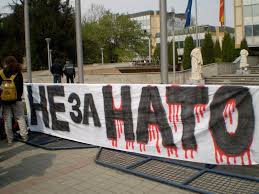
Εμφάνιση αναρτήσεων με ετικέτα ΝΑΤΟ. Εμφάνιση όλων των αναρτήσεων

Τρίτη 18 Μαρτίου 2014

Russia Examines Its Options for Responding to Ukraine

Geopolitical Weekly

  Print  Text Size 
The fall of the Ukrainian government and its replacement with one that appears to be oriented toward the West represents a major defeat for the Russian Federation. After the collapse of the Soviet Union, Russia accepted the reality that the former Eastern European satellite states would be absorbed into the Western economic and political systems. Moscow claims to have been assured that former Soviet republics would be left as a neutral buffer zone and not absorbed. Washington and others have disputed that this was promised. In any case, it was rendered meaningless when the Baltic states were admitted to NATO and the European Union. The result was that NATO, which had been almost 1,600 kilometers (1,000 miles) from St. Petersburg, was now less than approximately 160 kilometers away.  
This left Belarus and Ukraine as buffers. Ukraine is about 480 kilometers from Moscow at its closest point. Were Belarus and Ukraine both admitted to NATO, the city of Smolensk, which had been deep inside the Soviet Union, would have become a border town. Russia has historically protected itself with its depth. It moved its borders as far west as possible, and that depth deterred adventurers -- or, as it did with Hitler and Napoleon, destroyed them. The loss of Ukraine as a buffer to the West leaves Russia without that depth and hostage to the intentions and capabilities of Europe and the United States.

There are those in the West who dismiss Russia's fears as archaic. No one wishes to invade Russia, and no one can invade Russia. Such views appear sophisticated but are in fact simplistic. Intent means relatively little in terms of assessing threats. They can change very fast. So too can capabilities. The American performance in World War I and the German performance in the 1930s show how quickly threats and capabilities shift. In 1932, Germany was a shambles economically and militarily. By 1938, it was the dominant economic and military power on the European Peninsula. In 1941, it was at the gates of Moscow. In 1916, U.S. President Woodrow Wilson ran a sincere anti-war campaign in a country with hardly any army. In 1917, he deployed more than a million American soldiers to Europe.

Russia's viewpoint is appropriately pessimistic. If Russia loses Belarus or Ukraine, it loses its strategic depth, which accounts for much of its ability to defend the Russian heartland. If the intention of the West is not hostile, then why is it so eager to see the regime in Ukraine transformed? It may be a profound love of liberal democracy, but from Moscow's perspective, Russia must assume more sinister motives.

Quite apart from the question of invasion, which is obviously a distant one, Russia is concerned about the consequences of Ukraine's joining the West and the potential for contagion in parts of Russia itself. During the 1990s, there were several secessionist movements in Russia. The Chechens became violent, and the rest of their secession story is well known. But there also was talk of secession in Karelia, in Russia's northwest, and in the Pacific Maritime region.

What was conceivable under Boris Yeltsin was made inconceivable under Vladimir Putin. The strategy Putin adopted was to increase Russia's strength moderately but systematically, to make that modest increase appear disproportionately large. Russia could not afford to remain on the defensive; the forces around it were too powerful. Putin had to magnify Russia's strength, and he did. Using energy exports, the weakness of Europe and the United States' distraction in the Middle East, he created a sense of growing Russian power. Putin ended talk of secession in the Russian Federation. He worked to create regimes in Belarus and Ukraine that retained a great deal of domestic autonomy but operated within a foreign policy framework acceptable to Russia. Moscow went further, projecting its power into the Middle East and, in the Syrian civil war, appearing to force the United States to back out of its strategy.

It is not clear what happened in Kiev. There were of course many organizations funded by American and European money that were committed to a reform government. It is irrelevant whether, as the Russians charge, these organizations planned and fomented the uprising against former President Viktor Yanukovich's regime or whether that uprising was part of a more powerful indigenous movement that drew these groups along. The fact was that Yanukovich refused to sign an agreement moving Ukraine closer to the European Union, the demonstrations took place, there was violence, and an openly pro-Western Ukrainian government was put in place.

The Russians cannot simply allow this to stand. Not only does it create a new geopolitical reality, but in the longer term it also gives the appearance inside Russia that Putin is weaker than he seems and opens the door to instability and even fragmentation. Therefore, the Russians must respond. The issue is how. 

Russia's Potential Responses

The first step was simply making official what has been a reality. Crimea is within the Russian sphere of influence, and the military force Moscow has based in Crimea under treaties could assert control whenever it wished. That Sevastopol is a critical Russian naval base for operations in the Black and Mediterranean seas was not the key. A treaty protected that. But intervention in Crimea was a low-risk, low-cost action that would halt the appearance that Russia was hemorrhaging power. It made Russia appear as a bully in the West and a victor at home. That was precisely the image it wanted to project to compensate for its defeat.

Several options are now available to Russia.
First, it can do nothing. The government in Kiev is highly fractious, and given the pro-Russian factions' hostility toward moving closer to the West, the probability of paralysis is high. In due course, Russian influence, money and covert activities can recreate the prior neutrality in Ukraine in the form of a stalemate. This was the game Russia played after the 2004 Orange Revolution. The problem with this strategy is that it requires patience at a time when the Russian government must demonstrate its power to its citizens and the world. Moreover, if Crimea does leave Ukraine, it will weaken the pro-Russian bloc in Kiev and remove a large number of ethnic Tartars from Ukraine's political morass. It could be enough of a loss to allow the pro-Russian bloc to lose what electoral power it previously had (Yanukovich beat Yulia Timoshenko by fewer than a million votes in 2010). Thus, by supporting Crimea's independence -- and raising the specter of an aggressive Russia that could bind the other anti-Russian factions together -- Putin could be helping to ensure that a pro-Western Ukraine persists.
Second, it can invade mainland Ukraine. There are three problems with this. First, Ukraine is a large area to seize and pacify. Russia does not need an insurgency on its border, and it cannot guarantee that it wouldn't get one, especially since a significant portion of the population in western Ukraine is pro-West. Second, in order for an invasion of Ukraine to be geopolitically significant, all of Ukraine east of the Dnieper River must be taken. Otherwise, the frontier with Russia remains open, and there would be no anchor to the Russian position. However, this would bring Russian forces to the bank opposite Kiev and create a direct border with NATO and EU members. Finally, if the Russians wish to pursue the first option, pulling eastern Ukrainian voters out of the Ukrainian electoral process would increase the likelihood of an effective anti-Russian government.
Third, it can act along its periphery. In 2008, Russia announced its power with authority by invading Georgia. This changed calculations in Kiev and other capitals in the region by reminding them of two realities. First, Russian power is near. Second, the Europeans have no power, and the Americans are far away. There are three major points where the Russians could apply pressure: the Caucasus countries, Moldova and the Baltics. By using large Russian minority populations within NATO countries, the Russians might be able to create unrest there, driving home the limits of NATO's power.
Fourth, it can offer incentives in Eastern and Central Europe. Eastern and Central European countries, from Poland to Bulgaria, are increasingly aware that they may have to hedge their bets on Europe and the West. The European economic crisis now affects politico-military relations. The sheer fragmentation of European nations makes a coherent response beyond proclamations impossible. Massive cuts in military spending remove most military options. The Central Europeans feel economically and strategically uneasy, particularly as the European crisis is making the European Union's largest political powers focus on the problems of the eurozone, of which most of these countries are not members. The Russians have been conducting what we call commercial imperialism, particularly south of Poland, entering into business dealings that have increased their influence and solved some economic problems. The Russians have sufficient financial reserves to neutralize Central European countries.
Last, it can bring pressure to bear on the United States by creating problems in critical areas. An obvious place is Iran. In recent weeks, the Russians have offered to build two new, non-military reactors for the Iranians. Quietly providing technological support for military nuclear programs could cause the Iranians to end negotiations with the United States and would certainly be detected by U.S. intelligence. The United States has invested a great deal of effort and political capital in its relations with the Iranians. The Russians are in a position to damage them, especially as the Iranians are looking for leverage in their talks with Washington. In more extreme and unlikely examples, the Russians might offer help to Venezuela's weakening regime. There are places that Russia can hurt the United States, and it is now in a position where it will take risks -- as with Iran's nuclear program -- that it would not have taken before. 
The European and American strategy to control the Russians has been to threaten sanctions. The problem is that Russia is the world's eighth-largest economy, and its finances are entangled with the West's, as is its economy. For any sanctions the West would impose, the Russians have a counter. There are many Western firms that have made large investments in Russia and have large Russian bank accounts and massive amounts of equipment in the country. The Russians can also cut off natural gas and oil shipments. This would of course hurt Russia financially, but the impact on Europe -- and global oil markets -- would be more sudden and difficult to manage. Some have argued that U.S. energy or European shale could solve the problem. The Russian advantage is that any such solution is years away, and Europe would not have years to wait for the cavalry to arrive. Some symbolic sanctions coupled with symbolic counter-sanctions are possible, but bringing the Russian economy to its knees without massive collateral damage would be hard. 
The most likely strategy Russia will follow is a combination of all of the above: pressure on mainland Ukraine with some limited incursions; working to create unrest in the Baltics, where large Russian-speaking minorities live, and in the Caucasus and Moldova; and pursuing a strategy to prevent Eastern Europe from coalescing into a single entity. Simultaneously, Russia is likely to intervene in areas that are sensitive to the United States while allowing the Ukrainian government to be undermined by its natural divisions. 

Considering the West's Countermoves

In all of these things there are two questions. The first is what German foreign policy is going to be. Berlin supported the uprising in Ukraine and has on occasion opposed the Russian response, but it is not in a position to do anything more concrete. So far, it has tried to straddle the divides, particularly between Russia and the European Union, wanting to be at one with all. The West has now posed a problem to the Russians that Moscow must respond to visibly. If Germany effectively ignores Russia, Berlin will face two problems. The first will be that the Eastern Europeans, particularly the Poles, will lose massive confidence in Germany as a NATO ally, particularly if there are problems in the Baltics. Second, it will have to face the extraordinary foreign policy divide in Europe. Those countries close to the buffers are extremely uneasy. Those farther away -- Spain, for instance -- are far calmer. Europe is not united, and Germany needs a united Europe. The shape of Europe will be determined in part by Germany's response.

The second question is that of the United States. I have spoken of the strategy of balance of power. A balance of power strategy calls for calibration of involvement, not disengagement. Having chosen to support the creation of an anti-Russian regime in Ukraine, the United States now faces consequences and decisions. The issue is not deployments of major forces but providing the Central Europeans from Poland to Romania with the technology and materiel to discourage Russia from dangerous adventures -- and to convince their publics that they are not alone. 
The paradox is this: As the sphere of Western influence has moved to the east along Russia's southern frontier, the actual line of demarcation has moved westward. Whatever happens within the buffer states, this line is critical for U.S. strategy because it maintains the European balance of power. We might call this soft containment.

It is far-fetched to think that the Russians would move beyond commercial activity in this region. It is equally far-fetched that EU or NATO expansion into Ukraine would threaten Russian national security. Yet history is filled with far-fetched occurrences that in retrospect are obvious. The Russians have less room to maneuver but everything at stake. They might therefore take risks that others, not feeling the pressure the Russians feel, would avoid. Again, it is a question of planning for the worst and hoping for the best.

For the United States, creating a regional balance of power is critical. Ideally, the Germans would join the project, but Germany is closer to Russia, and the plan involves risks Berlin will likely want to avoid. There is a grouping in the region called the Visegrad battlegroup. It is within the framework of NATO and consists of Poland, the Czech Republic, Slovakia and Hungary. It is now more a concept than a military. However, with U.S. commitment and the inclusion of Romania, it could become a low-cost (to the United States) balance to a Russia suddenly feeling insecure and therefore unpredictable. This, and countering Russian commercial imperialism with a U.S. alternative at a time when Europe is hardly in a position to sustain the economies in these countries, would be logical.
This has been the U.S. strategy since 1939: maximum military and economic aid with minimal military involvement. The Cold War ended far better than the wars the Americans became directly involved in. The Cold War in Europe never turned hot. Logic has it that at some point the United States will adopt this strategy. But of course, in the meantime, we wait for Russia's next move, or should none come, a very different Russia.


Read more: Russia Examines Its Options for Responding to Ukraine | Stratfor
Follow us: @stratfor on Twitter | Stratfor on Facebook

Σάββατο 18 Δεκεμβρίου 2010

Πρώην Γερμανός Πρέσβης: "Η Μακεδονία δεν υπηρξέ ποτέ Ελληνική πρίν το 1912" !

18 Δεκ 2010


Αυτό σημαίνει προπαγάνδα κύριοι. Ανατολικού τύπου!


Πρώην Γερμάνος Πρέσβης: "Η Μακεδονία δεν υπηρξέ ποτέ Ελληνική πρίν το 1912" !!

Ανιστορήτες και προκλητικές δηλώσεις βασισμένες στη Σκοπιανή προπαγάνδα άπο πρώην Γερμανο πρεσβής των Σκοπίων σε συνέντευξη του από το σκοπιανό κανάλι A1.

Ο γραφικός και δηθέν σοβαροφανής πρώην Γερμανός πρεσβής των Σκοπίων Hans-Lothar Steppan σε συνεντευξή του δήλωσε οτι η Ελλαδα ποτε δεν κατειχε Μακεδονικες περιοχες και οτι η Θεσσαλονικη και οι αναλογες περιοχες της Βορείας Ελλάδας δεν υπηρξάν ποτε Ελληνικές πριν το 1913-1912 !!
Δήλωσε επίσης οτι η Ελλάδα απέκτησε την Θεσσαλονίκη και τις γύρω περιοχές της σημερινής βόρειας Ελλάδας με την βία κατά τους Βαλκανικούς πολέμους και οτι δεν υπήρξε ποτέ Ελληνικη Μακεδονία, ουτε στην αρχαία εποχή, ούτε στην βυζαντινή, αλλα ουτε και στην Οθωμανική εποχή !

Δειτέ το βίντεο με την συνέντευξη του γερμανικού φερέφωνου των Σκοπίων Hans-Lothar

http://www.greece.org

H γεωπολιτική μας γειτονιά. Η Ρουμανία μέσα από το βλέμμα του Αμερικανού αναλυτή Δρ. Φρήντμαν.

Geopolitical Journey, Part 3: Romania


Editor’s note: This is the third installment in a series of special reports that Dr. Friedman will write over the next few weeks as he travels to Turkey, Moldova, Romania, Ukraine and Poland. In this series, he will share his observations of the geopolitical imperatives in each country and conclude with reflections on his journey as a whole and options for the United States.
By George Friedman
In school, many of us learned the poem Invictus. It concludes with the line, “I am the master of my fate, I am the captain of my soul.” This is a line that a Victorian gentleman might bequeath to an American businessman. It is not a line that resonates in Romania. Nothing in their history tells Romanians that they rule their fate or dominate their soul. Everything in their history is a lesson in how fate masters them or how their very soul is a captive of history. As a nation, Romanians have modest hopes and expectations tempered by their past.
This sensibility is not alien to me. My parents survived the Nazi death camps, returned to Hungary to try to rebuild their lives and then found themselves fleeing the communists. When they arrived in America, their wishes were extraordinarily modest, as I look back on it. They wanted to be safe, to get up in the morning, to go to work, to get paid — to live. They were never under the impression that they were the masters of their fate.
The problem that Romania has is that the world cares about it. More precisely, empires collide where Romania is. The last iteration was the Cold War. Today, at the moment, things seem easier, or at least less desperate, than before. Still, as I discussed in Borderlands, the great powers are sorting themselves out again and therefore Romania is becoming more important to others. It is not clear to me that the Romanians fully appreciate the shift in the geopolitical winds. They think they can hide in Europe, and perhaps they can. But I suspect that history is reaching for Romania again.

Geopolitics and Self-Mutilation

Begin with geography. The Carpathian Mountains define Romania, but in an odd way. Rather than serving as the border of the country, protecting it, the Carpathians are an arc that divides the country into three parts. To the south of the mountains is the Wallachian Plain, the heart of contemporary Romania, where its capital, Bucharest, and its old oil center, Ploesti, are located. In the east of the Carpathians is the Moldavian Plain. To the northwest of the Carpathians is Transylvania, more rugged, hilly country.

And this is the geopolitical tragedy of Romania. Romania is one nation divided by its geography. None of the three parts is easy to defend. Transylvania came under Hungarian rule in the 11th century, and Hungary came under Ottoman and Austro-Hungarian rule. Wallachia came under Ottoman rule, and Moldavia came under Ottoman and Russian rule. About the only time before the late 19th century that Romania was united was when it was completely conquered. And the only time it was completely conquered was when some empire wanted to secure the Carpathians to defend itself.
Some of us experience geopolitics as an opportunity. Most of humanity experiences it as a catastrophe. Romania has been a nation for a long time, but rarely has it been a united nation-state. After becoming a nation-state in the late 19th century, it had a precarious existence, balanced between Austria-Hungary, the Ottoman Empire and Russia, with Germany a more distant but powerful reality. Romania spent the inter-war years trying to find its balance between monarchy, authoritarianism and fascism, and it never quite found it. It sought safety in an alliance with Hitler and found itself on the front lines in the German invasion of Russia. To understand Romania as an ally one must bear this in mind: When the Soviets began their great counterattack at Stalingrad, they launched it over Romanian (and Hungarian) troops. Romanians maneuvered themselves into the position of fighting and dying for the Germans, and then got their revenge on the Germans by being slaughtered by the Soviets.
All of this led to Romania’s occupation by the Soviets, toward whom the Romanians developed a unique strategy. The Hungarians rose up against the Soviets and were crushed, and the Czechoslovaks tried to create a liberal communist regime that was still loyal to the Soviets and were crushed. The Romanians actually achieved a degree of autonomy from the Soviets in foreign affairs. The way the Romanians got the Soviets to tolerate this was by building a regime more rigid and oppressive than even that of the Soviet Union at the time. The Soviets knew NATO wasn’t going to invade, let alone invade through Romania. So long as the Romanian regime kept the people in line, the Russians could tolerate their maneuvers. Romania retained its national identity and an independent foreign policy but at a stunning price in personal freedom and economic well-being.
Contemporary Romania cannot be understood without understanding Nicolae Ceausescu. He called himself the “Genius of the Carpathians.” He may well have been, but if so, the Carpathian definition of genius is idiosyncratic. The Romanian communist government was built around communists who had remained in Romania during World War II, in prison or in hiding. This was unique among the Soviet Union’s Eastern European satellites. Stalin didn’t trust communists who stayed home and resisted. He preferred communists who had fled to Moscow in the 1930s and had proved themselves loyal to Stalin by their betrayal of others. He sent Moscow communists to rule the rest of the newly occupied countries that buffered Russia from the West. Not so in Romania, where native communists ruled. After the death of the founder of communist Romania, Gheorghe Gheorghiu-Dej, another Romanian communist who stayed in Romania ultimately took over: Ceausescu. This was a peculiarity of Romanian communism that made it more like Josip Broz Tito’s Yugoslavia in foreign policy, and more like a bad dream in domestic policy.
Ceausescu decided to pay off the national debt. His reason seemed to flow from his foreign policy — he didn’t want Romania to be trapped by any country because of its debt — and he repaid it by selling to other countries nearly everything that was produced in Romania. This left Romania in staggering poverty; electricity and heat were occasional things, and even food was scarce in a country that had a lot of it. The Securitate, a domestic secret police whose efficiency and brutality were impressive, suppressed unrest. Nothing in Romania worked as well as the Securitate.
Herta Muller is a Romanian author who writes in German (she is part of Romania’s ethnic German community) and who won the Nobel Prize for Literature in 2009. One of her books, The Appointment, takes place in Romania under the communists. It gives an extraordinary sense of a place ruled by the Securitate. It is about a woman who is living her life, working at her job and dealing with an alcoholic husband while constantly preparing for and living in dread of appointments with the secret police. As in Kafka, what they are looking for and what she is hiding are unclear. But the danger is unrelenting and permeates her entire consciousness. When one reads this book, as I did in preparing for this trip, one understands the way in which the Securitate tore apart a citizen’s soul — and remembers that it was not a distant relic of the 1930s but was still in place and sustaining the Romanian regime in 1989.
It was as if the price that Romania had to pay for autonomy was to punch itself in the face continually. Even the fall of communism took a Romanian path. There was no Velvet Revolution here but a bloody one, where the Securitate resisted the anti-communist rising under circumstances and details that are still hotly debated and unclear. In the end, the Ceausescus (Nicolae’s wife Elena was also a piece of work, requiring a psychological genius to unravel) were executed and the Securitate blended into civil society as part of the organized-crime network that was mistaken for liberalization in the former Soviet empire by Western academics and reporters at the time.
Romania emerged from the previous 70 years of ongoing catastrophe by dreaming of simple things and having no illusions that these things were easy to come by or things Romanians could control. As with much of Eastern Europe but perhaps with a greater intensity, Romanians believed their redemption lay with the West’s multilateral organizations. If they were permitted to join NATO and especially the European Union, their national security needs would be taken care of along with their economic needs. Romanians yearned to become European simply because being Romanian was too dangerous.

The Redemption of Being European

In thinking of Romania, the phrase “institutionalized prisoner” comes to mind. In the United States it is said that if someone stays in prison long enough, he becomes “institutionalized,” someone who can no longer imagine functioning outside a world where someone else always tells him what to do. For Romania, national sovereignty has always been experienced as the process of accommodating itself to more powerful nations and empires. So after 1991, Romania searched for the “someone else” to which it could subordinate itself. More to the point, Romania imbued these entities with extraordinary redemptive powers. Once in NATO and the European Union, all would be well.
And until recently, all has been well, or well in terms of the modest needs of a historical victim. The problem Romania has is that these sanctuaries are in many ways illusions. It looks to NATO for defense, but NATO is a hollowed-out entity. There is a new and ambitious NATO strategy, which sets a global agenda for the organization. Long discussed, it is an exercise in meaninglessness. Countries like Germany have no military with which to fulfill the strategy, assuming that any agreement to act could be reached. NATO is a consensual organization, and a single member can block any mission. The divergent interests of an expanded NATO guarantee that someone will block everything. NATO is an illusion that comforts the Romanians, but only if they don’t look carefully. The Romanians seem to prefer the comforting illusion.

As for the European Union, there is a deep structural tension in the system. The main European economic power is Germany. It is also the world’s second-largest exporter. Its economy is built around exporting. For a country like Romania, economic development requires that it take advantage of its wage advantage. Lower wages allow developing countries to develop their economy through exports. But Europe is dominated by an export superpower. Unlike the postwar world, where the United States absorbed the imports of Germany and Japan without needing to compete with them, Germany remains an exporting country exporting into Romania and leaving precious little room for Romania to develop its economy.
At this stage of its development, Romania should be running a trade surplus, particularly with Germany, but it is not. In 2007, it exported about $40 billion worth of goods and imported about $70 billion. In 2009, it exported the same $40 billion but cut imports to only $54 billion (still a negative). Forty percent of its trade is with Germany, France and Italy, its major EU partners. But it is Germany where the major problem is. And this problem is compounded by the fact that a good part of Romania’s exports to Germany are from German-owned firms operating in Romania.
During the period of relative prosperity in Europe from 1991 to 2008, the structural reality of the EU was hidden under a rising tide. In 2008 the tide went out, revealing the structural reality. It is not clear when the tide of prosperity will come rolling back in. In the meantime, while the German economy is growing again, Romania’s is not. Because it exists in a system where the main engine is an exporter, and the exporter dominates the process of setting rules, it is difficult to see how Romania can take advantage of its greatest asset — a skilled workforce prepared to work for lower wages.
Add to this the regulatory question. Romania is a developing country. Europe’s regulations are drawn with a focus on the highly developed countries. The laws on employment guarantees mean that Europeans don’t hire workers, they adopt them. That means that entrepreneurship is difficult. Being an entrepreneur, as I well know, means making mistakes and recovering from them fast. Given the guarantees that every worker has in Europe, an entrepreneur cannot quickly recover from his mistakes. In Romania, the agility needed for risk-taking is not readily available under EU rules drawn up for a mature economy.
Romania should be a country of small entrepreneurs, and it is, but there is extensive evasion of Brussels’ — and Bucharest’s — regulations. It is a gray market that creates legal jeopardy and therefore corruption in the sector that Romania needs the most. Imagine if Germany had the regulations it champions today in 1955. Could it possibly have developed into what it is in 2010? There may be a time for these regulations (and that is debatable), but for Romania it is not now.
I met a Romanian entrepreneur who marketed industrial products. In talking to him, I raised the question of the various regulations governing his industry and how he handled them. There was no clear answer or, more precisely, I didn’t realize the answer he had given me until later. There are regulations and there are relationships. The latter mitigate the former. In Germany this might be called corruption. In Romania it is survival. A Romanian entrepreneur rigorously following EU regulations would rapidly go out of business. It may be that Romania is corrupt, but the regulatory structure of the EU imposed on a developing economy makes evasion the only rational strategy. And yet the entrepreneur I talked to was a champion of the European Union. He too hoped for the time when he could be a normal European. As Rousseau said, “I have seen these contradictions and they have not rebuffed me.”
It is difficult to for an outsider to see the specific benefits of NATO and EU membership for Romania. But for the Romanians, membership goes beyond the specifics.

Romania’s Choice

August and September are bad months in Europe. It is when wars and crises strike. August and September 2008 were bad months. That August, Russia struck Georgia. In September, the financial crisis burst wide open. In the first, Russia delivered a message to the region: This is what American guarantees are worth. In the European handling of the financial crisis in Eastern Europe, the Germans delivered a message on the limits of German responsibility. Both NATO and the European Union went from being guarantors of Romanian interests to being enormous question marks.
In my conversations with Romanians, at all levels and almost universally, I have found the same answer. First, there is no doubt that NATO and the European Union did not work in Romania’s favor at the moment. Second, there is no question of rethinking Romania’s commitment to either. There are those Romanians, particularly on the far right, who dislike the European Union in particular, but Romania has no strategic alternative.
As for the vast majority, they cannot and will not conceive of a Romania outside the confines of NATO and the European Union. The mere fact that neither is working well for Romania does not mean that they do not do something important: NATO and the European Union keep the anti-democratic demons of the Romanian soul at bay. Being part of Europe is not simply a matter of strategic or economic benefits. It represents a transitional point in Romanian history. With membership in the European Union and NATO, Romania has affirmed its modernity and its democratic institutions. These twin amulets have redeemed Romania’s soul. Given this, I suppose, an unfavorable trade balance and the absence of genuine security guarantees is a small price to pay. I am not Romanian, so I can’t feel their ineffable belief in Brussels.
Romanians do acknowledge, again almost universally, the return of Russia to the historical stage, and it worries them. Of particular concern is Moldova, a region to the east that was historically Romanian, taken by the Soviets in a treaty with Hitler and the rest of which was seized after World War II. Moldova became an independent country in 1991 (a country I will be visiting next). For much of the post-Cold War period it had a communist government that fell a few years ago. An election will be held on Nov. 28, and it appears that the communists might return. The feeling is that if the communists return this time, the Russians will return with them and, in the coming years, Russian troops will be on Romania’s borders.
Romanian officials are actively engaged in discussions with NATO officials about the Russians, but the Germans want a more active involvement of Russia in NATO and not tension between NATO and Russia. The Western Europeans are not about to be drawn into Eastern European paranoia fed by nostalgic American strategists wanting to relive the Cold War, as they think of it.
I raised two strategic alternatives with Romanian officials and the media. One was the Intermarium — an alliance, perhaps in NATO, perhaps not — of Poland, Slovakia, Hungary, Romania and Bulgaria. (To readers who asked why I did not go to Bulgaria on this trip, it was simply a matter of time. I will go there as soon as I can.) Very interestingly, one official pointed out substantial levels of cooperation on military planning between Hungary and Romania and discussions between Romania and Poland. How serious this is and whether it will go beyond the NATO context is unclear to me. Perhaps I can get a better sense in Warsaw.
But military planning is one thing; the wherewithal to execute military plans is quite another. The Romanians are now caught in a crisis over buying fighter planes. There are three choices: the Swedish Gripen, the Eurofighter and used American F-16s. The problem is that the Romanians don’t have the money for any of these aircraft, nor does it seem to me that these are the defense measures they really need. The Americans can provide air cover in a number of ways, and while 24 F-16s would have value, they would not solve Romania’s most pressing military problem. From where I sit, creating an effective mobile force to secure their eastern frontier is what is needed. The alternative I’ve heard was buying naval vessels to block a very real Russian naval buildup in the Black Sea. But if Romania has trouble buying 24 fighters, naval vessels are out of the question.
The Romanians are approaching defense planning from a NATO perspective — one used for planning, not implementation, and one that always leads to sophisticated systems while leaving the basics uncovered. This may seem like an unnecessary level of detail for this essay, but the Romanians are deep in this discussion, and questions like this are the critical details of strategies growing out of geopolitics. It is the difference between planning papers drawn up by think tanks and the ability to defend a nation.
The Black Sea is a critical part of Romania’s reality, and the rise of Turkey makes the system of relationships interesting. Turkey is Romania’s fourth-largest export target, and one of the few major trading partners that imports more from Romania than it exports. I pointed out to Romanians that it is the great good fortune of Turkey that it was not admitted to the European Union. Turkey’s economy grew by an annualized rate of 12 percent in the first quarter of 2010 and has been surging for years.
Turkey is becoming a regional economic engine and, unlike Germany, France and Italy, it offers compatibilities and synergies for Romania. In addition, Turkey is a serious military force and, while not seeking confrontation with Russia, it is not subservient to it. Turkey has adopted a “360 degree” strategy of engagement with all countries. And since Turkey is a NATO member, as are Hungary, Slovakia and Poland, there is no incompatibility with a dual strategy of the Intermarium and the Black Sea. For now, they fit. And the irony of Romania reaching out to the heir to the Ottomans is simply that and no more. This is the neighborhood that Romania inhabits. These are the options it has.
What doesn’t fit for Romania is the NATO/EU system alone. Perhaps this is part of a rational mix, but it cannot be all of it. For Romania, the problem is to move beyond the psychological comfort of Europe to a strategic and economic understanding that accepts that the post-Cold War world is over. More important, it would be a move toward accepting that Romania is free, responsible for its future and capable of managing it.
It is this last step that is the hardest for Romania and many of the former Soviet satellites — which were also bound up with World War I and Hitler’s disaster — to come to terms with. There is a connection between buying more expensive German cars than you can afford, and more of them than you need, and the novels of Herta Muller. The appointment can be permanently canceled, but the fear of the interrogation is always with you. In this region, the fear of the past dominates and oppresses while the confident, American-style military planning and economic restructuring I suggested is alien and frightening.
The Romanians emerged from a world of horror, some of it of their own making. They fear themselves perhaps more than they fear others. For them, becoming European is both a form of therapy and something that will restrain the demons within and without. When you live with bad memories, you live with the shadows of reality. For the Romanians, illusory solutions to haunting memories make a great deal of sense.
It makes sense until war comes, and in this part of the world, the coming of war has been the one certainty since before the Romans. It is only a question of when, with whom and what your own fate will be when it arrives. The Romanians believe with religious fervor that these things will be left behind if they become part of Europe. I am more skeptical. I had thought that Romania’s problem was that it was part of Europe, a weak power surrounded by stronger ones. They seem to believe that their solution is to be part of Europe, a weak power surrounded by stronger ones.
I leave Romania confused. The Romanians hear things that I am deaf to. It is even at a pitch my Hungarian part can’t hear. I leave now for another nation, Moldova, which has been even more exposed to history, one even stranger and more brutal than Romania’s.
Geopolitical Journey, Part 3: Romania is republished with permission of STRATFOR.

Πέμπτη 4 Νοεμβρίου 2010

Κλειστό το ΝΑΤΟ για τα Σκόπια

Όσο παραμένει σε εκκρεμότητα το πρόβλημα της ονομασίας

Του Γιώργου Χρηστίδη
http://www.makthes.gr/news/politics/64295/


Κλειστή θα παραμένει η πόρτα του ΝΑΤΟ για τα Σκόπια όσο το πρόβλημα της ονομασίας παραμένει σε εκκρεμότητα και δεν δίνεται λύση που να ικανοποιεί και την Ελλάδα. Αυτό τονίζουν στη "Μ" κορυφαίοι διπλωματικοί κύκλοι της Ουάσιγκτον, ενόψει της κρίσιμης συνόδου κορυφής της Συμμαχίας στις 19-20 Νοεμβρίου στη Λισαβόνα.
Οι ίδιοι κύκλοι, που εμπλέκονται άμεσα στην προετοιμασία των αμερικανικών θέσεων για τη σύνοδο, επισημαίνουν ότι σαφώς είναι επιθυμία της συμμαχίας να υποδεχθεί τους κόλπους της την ΠΓΔΜ, καθώς εκτιμάται πως θα συμβάλει στη σταθερότητα στην περιοχή, ξεκαθαρίζουν όμως παράλληλα ότι η αμερικανική στάση συνάδει απόλυτα με την επίσημη θέση της Συμμαχίας (από τη σύνοδο της Λισαβόνας το 2008), ότι η ΠΓΔΜ θα λάβει πρόσκληση ένταξης μόνο εφόσον βρεθεί λύση στο θέμα του ονόματος με την Ελλάδα.
Η κυβέρνηση του Μπαράκ Ομπάμα δεν έχει αλλάξει στάση στο θέμα των Σκοπίων, παρότι έχουν ασκηθεί έντονες πιέσεις το τελευταίο διάστημα για παράκαμψη της απόφασης της προηγούμενης συνόδου. Υπενθυμίζεται ότι πρόσφατα 19 μέλη της Βουλής των Αντιπροσώπων των ΗΠΑ είχαν ζητήσει από την αμερικανική κυβέρνηση να πιέσει τη συμμαχία να απευθύνει πρόσκληση ένταξης στα Σκόπια ανεξαρτήτως του θέματος του ονόματος.
 

Τρίτη 2 Νοεμβρίου 2010

Οι Σκοπιανοί δεν κάνουν πίσω...

Κλειστό το ΝΑΤΟ για τα Σκόπια 

http://www.makthes.gr/news/politics/64295/


Ημερομηνία: 02/11/201
Όσο παραμένει σε εκκρεμότητα το πρόβλημα της ονομασίας
Του Γιώργου Χρηστίδη

Κλειστή θα παραμένει η πόρτα του ΝΑΤΟ για τα Σκόπια όσο το πρόβλημα της ονομασίας παραμένει σε εκκρεμότητα και δεν δίνεται λύση που να ικανοποιεί και την Ελλάδα. Αυτό τονίζουν στη "Μ" κορυφαίοι διπλωματικοί κύκλοι της Ουάσιγκτον, ενόψει της κρίσιμης συνόδου κορυφής της Συμμαχίας στις 19-20 Νοεμβρίου στη Λισαβόνα.
Οι ίδιοι κύκλοι, που εμπλέκονται άμεσα στην προετοιμασία των αμερικανικών θέσεων για τη σύνοδο, επισημαίνουν ότι σαφώς είναι επιθυμία της συμμαχίας να υποδεχθεί τους κόλπους της την ΠΓΔΜ, καθώς εκτιμάται πως θα συμβάλει στη σταθερότητα στην περιοχή, ξεκαθαρίζουν όμως παράλληλα ότι η αμερικανική στάση συνάδει απόλυτα με την επίσημη θέση της Συμμαχίας (από τη σύνοδο της Λισαβόνας το 2008), ότι η ΠΓΔΜ θα λάβει πρόσκληση ένταξης μόνο εφόσον βρεθεί λύση στο θέμα του ονόματος με την Ελλάδα.
Η κυβέρνηση του Μπαράκ Ομπάμα δεν έχει αλλάξει στάση στο θέμα των Σκοπίων, παρότι έχουν ασκηθεί έντονες πιέσεις το τελευταίο διάστημα για παράκαμψη της απόφασης της προηγούμενης συνόδου. Υπενθυμίζεται ότι πρόσφατα 19 μέλη της Βουλής των Αντιπροσώπων των ΗΠΑ είχαν ζητήσει από την αμερικανική κυβέρνηση να πιέσει τη συμμαχία να απευθύνει πρόσκληση ένταξης στα Σκόπια ανεξαρτήτως του θέματος του ονόματος.

Σχόλια

  1. Μεταλλαγμένοι «ΜΑΚΕΔΟΝΕΣ» των Σκοπίων, αγνοούν την Σλαβο-Οθωμανική επιμιξιακή καταγωγή τους, και επιχειρούν να αποκτήσουν αρχαιο-ιστορική καταγωγή και σόϊ, χωρίς να εξελληνιστούν, έστω και με την φραστική αλήθεια του Ισοκράτη, «ως μετέχοντες της Ελληνικής Παιδείας», στο Μακεδονικό έδαφος, έστω ως εύσχημη ευφυολογική δικαιολογία, για τους αδαείς της Ιστορίας. Αν υπάρχουν!!! (Π.Μ.Ε)

Σάββατο 25 Σεπτεμβρίου 2010

Υπό τον πέλεκυ δημοψηφίσματος

Σκοπιανό
Tου Σταύρου Λυγερού
Τετάρτη, 22 Σεπτεμβρίου 2010
Πηγή: Εφημ. ΚΑΘΗΜΕΡΙΝΗ

Για άλλη μια φορά, οι διπλωματικοί διάδρομοι έχουν πλημμυρίσει από πληροφορίες - φήμες ότι μετά τις τοπικές εκλογές, η επίλυση του προβλήματος της ονομασίας της ΠΓΔΜ θα εισέλθει στην τελική ευθεία. Το μόνο σίγουρο, όμως, είναι ότι η αμερικανική διπλωματία πιέζει τις δύο κυβερνήσεις για επίτευξη συμφωνίας με σκοπό να καταστεί δυνατή η ένταξη της ΠΓΔΜ στο ΝΑΤΟ τον Νοέμβριο.

Σύμφωνα με τη συζητούμενη φόρμουλα το όνομα θα είναι «Δημοκρατία της Μακεδονίας του Βαρδάρη» και θα χρησιμοποιείται στους διεθνείς οργανισμούς. Επιπροσθέτως, δίνονται υποσχέσεις στην Αθήνα ότι το συμφωνηθέν όνομα θα χρησιμοποιηθεί από τις ΗΠΑ, τη Γαλλία και πιθανότατα τα υπόλοιπα μόνιμα μέλη του Συμβουλίου Ασφαλείας, στις διμερείς σχέσεις τους με τα Σκόπια. Την εικόνα, όμως, σκίασαν οι προ καιρού δηλώσεις του Αμερικανού πρεσβευτή στα Σκόπια. Κατ’ αυτόν, η Ουάσιγκτον επιδιώκει ένα όνομα, που θα αντικαταστήσει το ΠΓΔΜ κι όχι τροποποίηση του Συντάγματος. Η λύση δεν θα αφορά το όνομα της εθνότητας/γλώσσας, που έχει μείνει εκτός διαπραγμάτευσης. Αυτό πρακτικά σημαίνει ότι εμμέσως θα νομιμοποιηθεί ο όρος «μακεδονική».

Η κυβέρνηση Παπανδρέου εμφανίζεται έτοιμη να εγκαταλείψει την εθνική θέση «για κάθε χρήση» και να συμφωνήσει σε μια τέτοια φόρμουλα. Ακόμα, όμως, κι αν το Συμβούλιο Ασφαλείας εγκρίνει ψήφισμα με έκκληση προς τις χώρες-μέλη του ΟΗΕ να υιοθετήσουν το συμφωνηθέν όνομα στις διμερείς σχέσεις τους με τα Σκόπια, το πρόβλημα δεν θα λυνόταν οριστικά, δεδομένου ότι η εν λόγω έκκληση δεν μπορεί να είναι δεσμευτική. Είναι δεδομένο ότι οι Σλαβομακεδόνες θα επιδίδονταν σε διπλωματική εκστρατεία για να μην επικρατήσει όποιο όνομα συμφωνηθεί στις διμερείς σχέσεις τους με τα άλλα κράτη. Η Αθήνα θα υποχρεωνόταν να τους κυνηγάει από πίσω με τον αντίθετο στόχο. Παραλλήλως, τα Σκόπια θα συνέχιζαν να διεκδικούν τη συμμετοχή τους σε διεθνείς δραστηριότητες σαν «Μακεδονία». Οι διαπληκτισμοί για το όνομα θα συνεχίζονταν. Με άλλα λόγια, η Ελλάδα θα εγκλωβιζόταν σ’ ένα σισσύφειο έργο, καταναλώνοντας πολύτιμο διπλωματικό κεφάλαιο.

Ο μόνος τρόπος για να αποτραπεί μια τέτοια εξέλιξη, το όποιο όνομα συμφωνηθεί πρέπει να γίνει το νέο όνομα του γειτονικού κράτους. Ή τουλάχιστον με συνταγματική τροποποίηση να ορισθεί ως επίσημο όνομα του κράτους για όλες τις διεθνείς χρήσεις. Εάν δεν γίνει ούτε αυτό, η θέση «για όλες τις χρήσεις» θα καταντήσει ρητορεία χωρίς αντίκρισμα. Παρά την πρόθεση της κυβέρνησης Παπανδρέου να κάνει εκπτώσεις, η λύση δεν φαίνεται να είναι κοντά. Ο Νίκολα Γκρούεφσκι είναι τόσο βαθιά εμποτισμένος από το ιδεολόγημα του Μακεδονισμού, που δεν κρύβει την πρόθεσή του να τορπιλίσει ακόμα και έναν ευνοϊκό για τους Σλαβομακεδόνες συμβιβασμό. Κι αυτό παρότι το πρόβλημα της ονομασίας εμποδίζει την ενσωμάτωση της ΠΓΔΜ άμεσα στο ΝΑΤΟ και προοπτικά στην Ε.Ε. Η Ουάσιγκτον μπορεί να πιέσει αποτελεσματικά τα Σκόπια, αλλά δεν το πράττει.

Ο Γκρούεφσκι τηρεί αδιάλλακτη στάση, ελπίζοντας αφενός μια θετική απόφαση του Διεθνούς Δικαστηρίου κι αφετέρου τη μεταστροφή των πιέσεων προς την Αθήνα. Εάν η Ουάσιγκτον του βάλει το μαχαίρι στον λαιμό, έχει προαναγγείλει ότι όποια συμφωνία θα τεθεί προς έγκριση σε δημοψήφισμα. Προεξοφλεί δικαιολογημένα ότι οι ομοεθνείς του θα απορρίψουν οποιαδήποτε συμβιβαστική πρόταση, γεγονός που κατά την εκτίμησή του θα διαμορφώσει κόκκινη γραμμή και επιπροσθέτως θα τον θωρακίσει από μελλοντικές πιέσεις. Το όπλο του δημοψηφίσματος, όμως, είναι αμφίστομη μάχαιρα. Η Αθήνα έπρεπε να έχει ήδη προειδοποιήσει ότι εάν η συμφωνία τεθεί σε δημοψήφισμα στην ΠΓΔΜ θα τεθεί και στην Ελλάδα. Αυτό πρακτικά σημαίνει ότι τα Σκόπια θα μείνουν εκτός ΝΑΤΟ και Ε.Ε.

Πηγή: Εφημ. ΚΑΘΗΜΕΡΙΝΗ

Παρασκευή 17 Σεπτεμβρίου 2010

Τι λέμε στα Σκόπια;...Δεν θα σκάσουμε κι΄ όλας!...Μη σώσει και μπήτε!


17 Σεπ 2010
Σκόπια: Δεν αλλάζουμε το όνομά μας, κι ας μην μπούμε στην Ε.Ε. και το ΝΑΤΟ
Απο το Ιστολόγιο ΤΑΧΑΛΙΑ
http://taxalia.blogspot.com/2010/09/blog-post_3261.html

Η πΓΔΜ αναμένει καυτό πολιτικό φθινόπωρο καθώς προσπαθεί να εκπληρώσει τα κριτήρια για ένταξη στην ΕΕ. Η Ευρωπαϊκή Επιτροπή θα υποβάλει έκθεση το Νοέμβρη η οποία αξιολογεί την πρόοδο της χώρας στην εφαρμογή διαφόρων μεταρρυθμίσεων.

Περιλαμβάνουν βελτιώσεις στο δικαστικό σώμα, τη δημόσια διοίκηση, τους κανόνες και τις διαδικασίες της Συνέλευσης, καθώς...

επίσης εφαρμογή της Συμφωνίας Πλαισίου της Οχρίδας.

Ανεξάρτητα από το πόση πρόοδο έχει σημειώσει η πΓΔΜ σε αυτούς τους τομείς, η διαφωνία ονόματος της χώρας με τη γειτονική Ελλάδα εξακολουθεί να αποτελεί εμπόδιο. Αν και η επίλυση του ζητήματος δεν αποτελεί επίσημα προϋπόθεση για την ένταξη, η Αθήνα έχει επιρροή στο μπλοκ, και αρκετά άλλα μέλη της ΕΕ έχουν στηρίξει την Ελλάδα.

"Η Ελλάδα είναι κράτος-μέλος, κι εσείς όχι. Οι θέσεις σας δεν είναι ίσες. Ο κόσμος δεν είναι δίκαιος, ειδικά σε ό,τι αφορά στη διεθνή πολιτική", έχει δηλώσει ο Πρεσβευτής της Σουηδίας στην πΓΔΜ Λαρς Φρέντεν.

Στην πΓΔΜ, η γνώμη του κόσμου είναι διχασμένη, όχι μόνο μεταξύ των πολιτικών κομμάτων, αλλά και κατά μήκος εθνικών γραμμών.

"Η αλλαγή του ονόματος για ένταξη σε ΕΕ ή ΝΑΤΟ αποκλείεται. Οι πολιτικοί που θα έπρατταν κάτι τέτοιο θα διέπρατταν σίγουρα υψίστη προδοσία", ανέφερε ο Μπόρις Κοστόβσκι, πολίτης της πΓΔΜ, 57 ετών, από τα Σκόπια στους SETimes.

Σύμφωνα με έρευνα που διενεργήθηκε τον Ιούλιο από το Pavel Satev Institute το 60% των ψηφοφόρων της πΓΔΜ θα απέρριπτε αλλαγή του ονόματος για να υπάρξει Ευρωατλαντική ένταξη εάν διενεργούνταν αύριο δημοψήφισμα.

Αντιθέτως, κάτι περισσότερο από 73% των Αλβανών που δημοσκοπήθηκαν ανέφεραν ότι θα ψήφιζαν για την αλλαγή εάν σήμαινε ομαλότερη ενταξιακή πορεία. "Πρέπει να δεχθούμε συγκεκριμένο συμβιβασμό με την Ελλάδα, καθώς επιθυμούμε ένταξη σε ΝΑΤΟ και ΕΕ. Εάν το όνομα αποτελεί το μοναδικό εμπόδιο, τότε οι πολιτικοί πρέπει να βρουν λύση ώστε να καταφέρουμε αυτό που θέλουμε", ανέφερε ο 38χρονος Αλβανός από τα Σκόπια, Γιονούζ Μπερίσα, στους SETimes.

Δημοσκόπηση του Eurobarometer τον Αύγουστο κατέγραψε πτώση 6% από το προηγούμενο έτος στον αριθμό πολιτών της πΓΔΜ που θεωρούν ότι η ένταξη στην ΕΕ είναι καλή για τη χώρα.

Η κυβέρνηση επιμένει ότι είναι πρόθυμη να βρει λύση, αλλά όχι μία η οποία θα πλήξει την ταυτότητα και τα εθνικά συμφέροντα της πΓΔΜ.

Η κατάσταση αυτή έχει προκαλέσει νέες εντάσεις μεταξύ κυβέρνησης και της αντιπολίτευσης που ηγούνται οι Σοσιαλδημοκρατικοί, οι οποίοι πιέζουν για συμβιβασμό.

Με την έκθεση της EC να απέχει μόλις δύο μήνες, η πΓΔΜ έχει μικρό χρονικό περιθώριο για να εδραιώσει την εικόνα της για τη μεταρρύθμιση, και, εάν είναι εφικτό, να φέρει τη θέση της εγγύτερα σε αυτή της Ελλάδας σχετικά με το ζήτημα του ονόματος.

Οι περισσότεροι αναλυτές πιστεύουν ότι η αποκατάσταση των φιλικών σχέσεων πιθανότατα να πρέπει να περιμένει μέχρι να αναλάβει η Ουγγαρία την εκ περιτροπής προεδρία της ΕΕ το 2011. Το Βέλγιο, νυν κάτοχος της προεδρίας, έχει υπηρεσιακή κυβέρνηση και δεν μπορεί να εμπλακεί πολύ στο ζήτημα της πΓΔΜ.


Από το SETimes, The news and views of Southeast Europe